Fiber Cement Siding Colors by Family, With Trim and Repainting Notes
Free sign-up with email or Google. You get 2 free renders in most countries; free renders are watermarked.
Fiber cement siding is usually painted or factory finished, so the color is the big decision. Upload a photo of your house below to try a siding color on your own walls, then read what three published sources say about colors, trim and finishes and see three before and after examples.
Siding colorsBefore and after examples
Example images are AI-generated: both the sample houses and their redesigns. Results change from render to render, so treat them as concepts, not exact product matches.
 Before
 After
After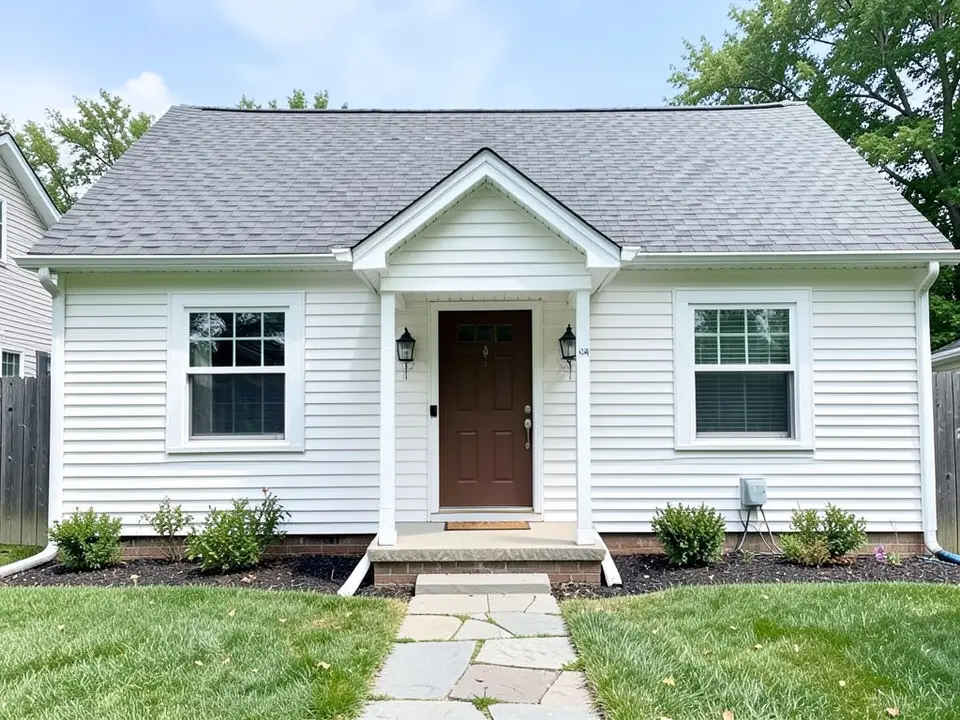 Before
 After
After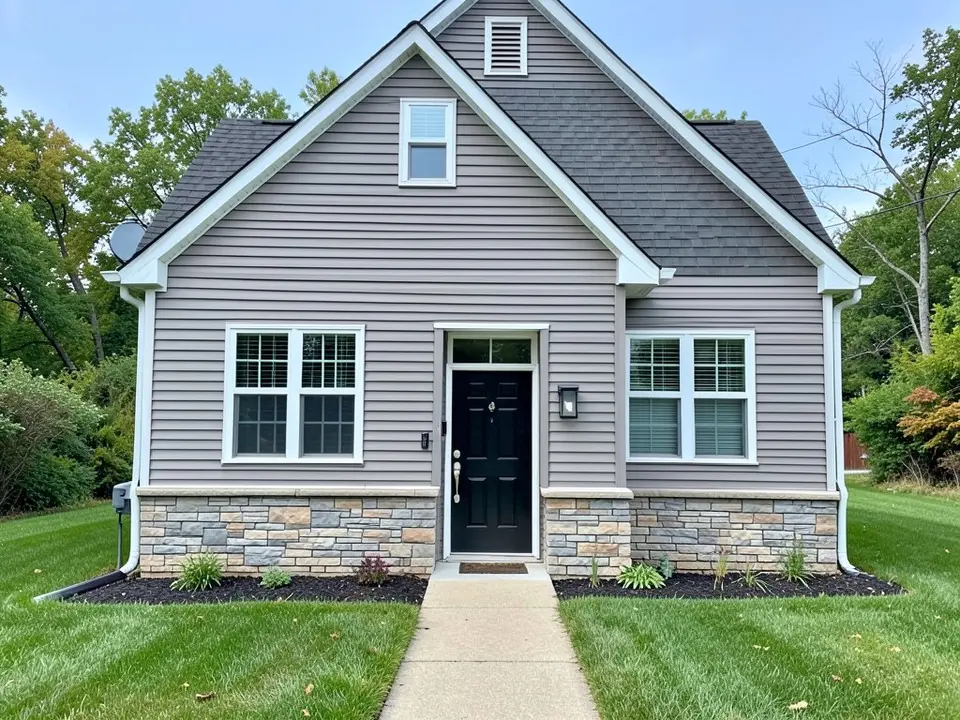 Before
 After
AfterWhat the AI can and cannot do
It can repaint the siding in your photo a new color and keep the board lines, so you can see a color next to your roof, stone and trim.
It cannot show the material. The examples are color changes on lap siding, not proof that a board is fiber cement, and it cannot match a manufacturer's color or finish. The captions list what else changed, like the lawn. Treat each result as a direction to test with a real sample.
Fiber cement siding color families
The ideas below come from brick&batten, a virtual exterior design company, in an article by Megan dated June 29, 2021. It is a promotional blog post that links to the company's own design services, so treat it as one opinion. It groups colors into families, which we have summarized in our own words:
- Light neutrals and whites.
- Warm taupes and beiges.
- Mid-to-dark grays. The article says warm grays can feel current, while cool, all-gray palettes can look flat.
- Earthy browns and deep greens.
- Blues.
- Dramatic charred or near-black tones. The article says dark siding needs variation in texture and materials, such as wood, stone or metal accents, so it does not look flat.
This page covers fiber cement as a material, in any maker's line. If you are comparing one brand's palette, see James Hardie siding colors.
Trim, finishes and repainting
- Trim. brick&batten says trim can match the siding for a tonal look or contrast with it. It suggests light trim for traditional homes and darker trim for contemporary ones. See exterior trim colors.
- Primed or factory finished. brick&batten says siding is sold primed for on-site painting or with a factory finish it says lasts longer than a typical field paint job. This Old House (Sal Vaglica, updated October 4, 2024) says planks can be prepainted or preprimed and that factory color helps resist fading and peeling.
- Repainting. This Old House says repainting may still be needed every 10 to 15 years to refresh the look, and recommends exterior paint made for fiber cement. The color is not permanent, as brick&batten also notes that siding can be repainted later.
- Moisture and dust. Natural Handyman ("The Pros and Cons of Fiber Cement Siding For Your Home" by Allison E. Beatty, 2025 site copyright, no article date) says moisture behind the boards from poor installation is the main concern, and that cutting needs special tools and care with hazardous dust. Hire installers with experience.
- Textures. Natural Handyman says it comes in smooth, grooved and stucco-like textures, and in lap widths up to about 10 inches for a rustic look, as well as shingle form. This Old House says it can imitate wood grain, smooth finishes or stucco.
We do not quote prices or warranties here; ask a local supplier. Check anything that matters against the manufacturer's own instructions.
Choose the color around what stays
brick&batten says to choose siding after considering the fixed elements, such as the roof, brick, stone, windows and hardscape; to pull a secondary tone from masonry rather than match it exactly; and to sample colors in your own natural light next to the roof, masonry and trim. If your roof is staying, see house colors with a black roof and house colors with a brown roof.
Three siding colors to try
The examples were run directly on an image model, not through the tool above, so your results will look different. They show color on lap siding. The AI is not showing the material.
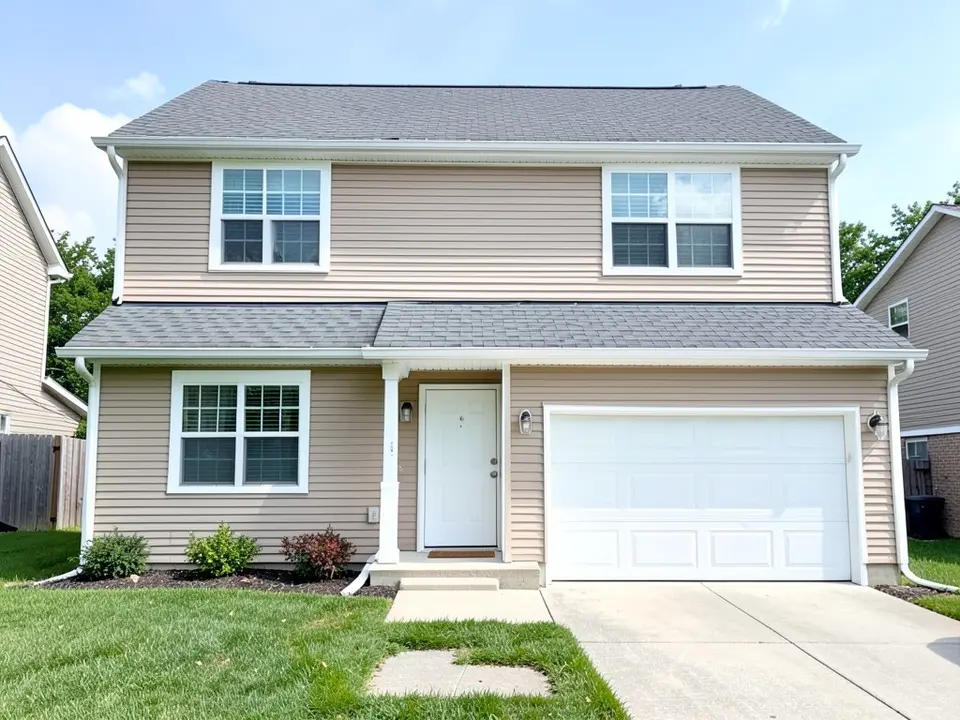
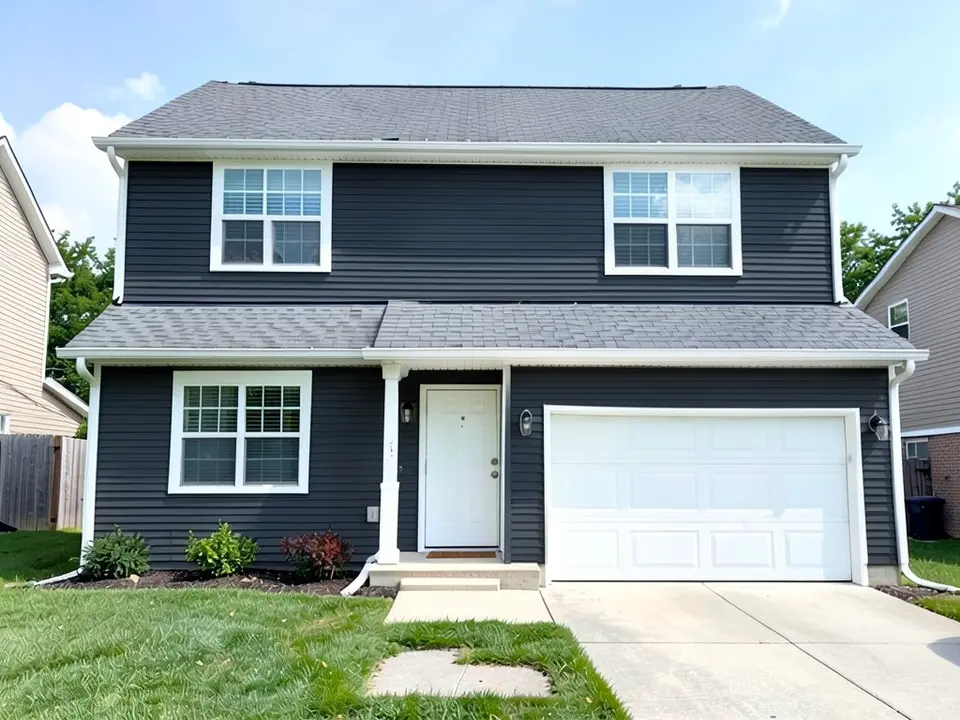
- Charcoal on beige. Example 1 takes a beige house with white trim to a deep charcoal, the dramatic dark end of the families above. It came out close to black.
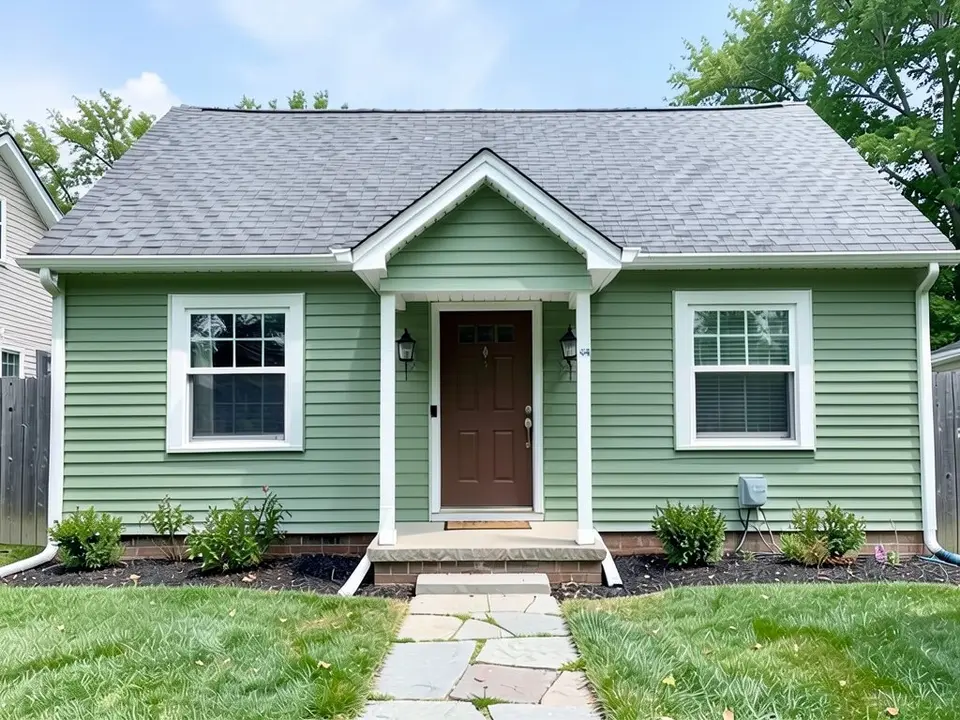
- Sage on white. Example 2 takes a white house to a sage green and keeps the white trim and a brown door, an earthy deep-green idea from the families above.
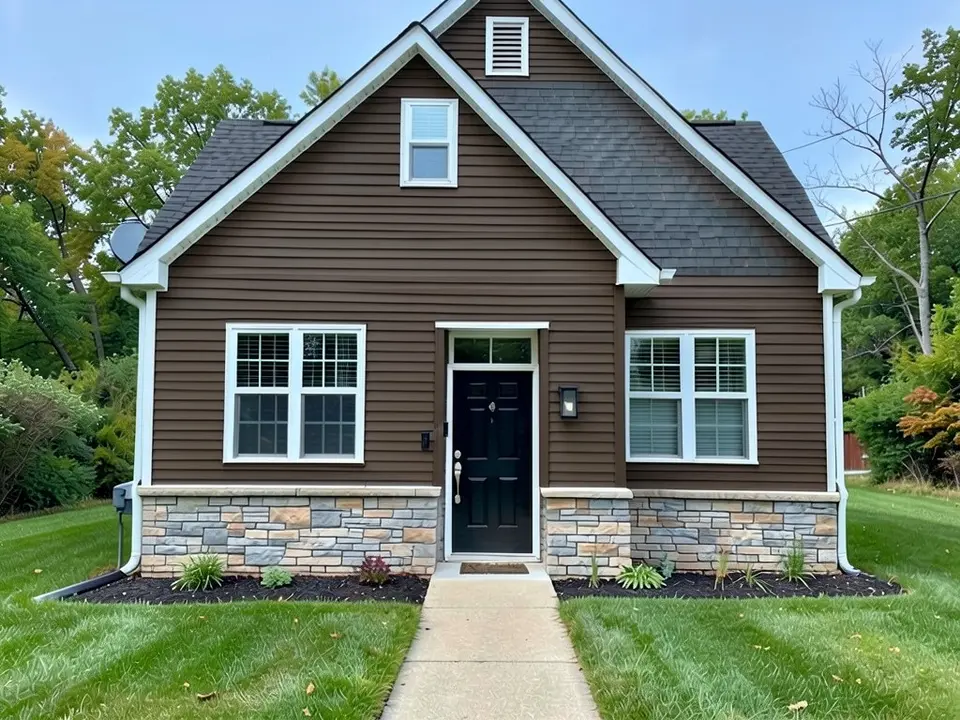
- Mocha brown on gray. Example 3 takes a gray house with a stone base to a dark brown, the earthy brown family. A first try on a similar house came out orange-brown, so it was reworded and rerun.
How to try a siding color on your house
- Photograph the front in daylight, straight on, from far enough back that the whole house and the roof fit in the frame.
- Upload it in the tool at the top of this page, or open the exterior designer, and name the new siding color.
- Say to keep the board lines and list the trim, door, stone and roof to keep, as the prompts below do.
- Check the whole image. Look at the trim, the doors and the roof, and run it again if something changed that you did not ask for.
The exact prompts behind the examples
These are the edit prompts used for the three examples, word for word. Change the colors and the list of what stays to suit your house. Example 3 shows the second try, with the no-orange wording; the first try is described in its caption.
Prompt 1: lap siding to deep charcoal
Change only the wall siding color: repaint the beige lap siding on every wall and the garage wall a deep charcoal gray, keeping the same horizontal board lines. Keep the white corner boards, the white window trim, the white front door, the garage door, the roof, the walkway, the lawn, the sky and the camera angle exactly the same.
Prompt 2: lap siding to soft sage green
Change only the wall siding color: repaint the white lap siding on every wall and the porch gable a soft muted sage green, keeping the same horizontal board lines. Keep the white trim, the brown front door, the roof, the stone path, the lawn, the sky and the camera angle exactly the same.
Prompt 3: lap siding to muted mocha brown
Change only the wall siding color: repaint the gray lap siding on every wall and the gable a muted dark mocha brown, a brown with gray in it and no orange, keeping the same horizontal board lines. Keep the stone base, the white window trim, the black front door, the roof, the walkway, the lawn, the sky and the camera angle exactly the same.
Before you buy
- Look at physical samples next to the roof and stone, in daylight.
- Check your HOA or town. Some limit exterior colors.
- Ask which finish you are buying, primed for painting or factory finished, and how the maker says to repaint it.
Who this is for
Homeowners deciding on a color for new or repainted siding, and anyone who wants to compare a few siding colors on their own house before ordering samples.
More siding ideas
See James Hardie siding colors for a brand-specific page, siding colors, composite siding ideas, vinyl siding colors, lap siding ideas, board and batten siding ideas and types of siding.
Frequently asked questions
What colors does fiber cement siding come in?
Almost any, because it can be painted. brick&batten groups the colors into light neutrals and whites, warm taupes and beiges, mid-to-dark grays, earthy browns and deep greens, blues, and dramatic charred or near-black tones. This Old House says it comes in many colors and textures, and Natural Handyman says it can be painted in many colors.
Does the AI show fiber cement, or only the color?
Only the color. The tool repaints the walls in your photo and keeps the board lines, as in our examples. It cannot show the material, check that your siding is fiber cement or show how a real board will look. Use it to compare colors, then look at physical samples.
Is fiber cement siding sold primed or finished?
Both, according to the sources. brick&batten says it is sold primed for painting on site or with a factory-applied finish. This Old House says planks can be prepainted or preprimed before they leave the factory, and that a factory color helps resist fading and peeling. Ask the supplier which you are getting.
How often does fiber cement need repainting?
This Old House (updated October 4, 2024) says that even with a baked-on factory color, repainting may be needed every 10 to 15 years to refresh the look. It recommends a high-quality exterior paint made for fiber cement and following the maker's preparation instructions. That is one source, not a guarantee for your house.
Should the trim match the siding?
brick&batten says trim can match the siding for a tonal look or contrast with it to define windows and rooflines. It suggests light trim for traditional homes, darker trim for contemporary ones, contrast for a simple facade and a tonal look for a busy one.
What should I check before choosing a dark color?
brick&batten says dark siding needs variation in texture and materials, such as wood, stone or metal accents, so it does not look flat, and that a sample should be checked in natural light next to the roof, masonry and trim. Our charcoal example came out close to black, so test a real sample.
Is fiber cement different from the other siding pages on this site?
This page is about colors on fiber cement lap siding. For a brand-specific color list see the page on James Hardie siding colors, and for other materials see the composite siding, vinyl siding and lap siding pages. The AI preview works the same on any of them: it changes color, not the real material.
Is this tool free?
Signing up is free and gives you 5 credits, which is enough for 2 renders in most countries. Free renders carry an AiExterior watermark. If you want more renders or clean images, paid plans are available on the pricing page.
Do I need an account?
Yes. You need to sign in before a render starts, with an email code or your Google account.
Try it on your own house
Upload your house photoFree sign-up with email or Google. You get 2 free renders in most countries; free renders are watermarked.