See Stone Veneer on a Photo of Your Own House
Upload a photo of your house and describe the stone you want: a stacked stone wainscot, ledgestone column bases, a fieldstone chimney or a full stone entry wall. AiExterior draws it on your photo so you can compare placements and stone styles before you order samples or ask for quotes.
Free sign-up with email or Google. You get 2 free renders in most countries; free renders are watermarked.
Before and after examples
Example images are AI-generated: both the sample houses and their redesigns. Results change from render to render, so treat them as concepts, not exact product matches.
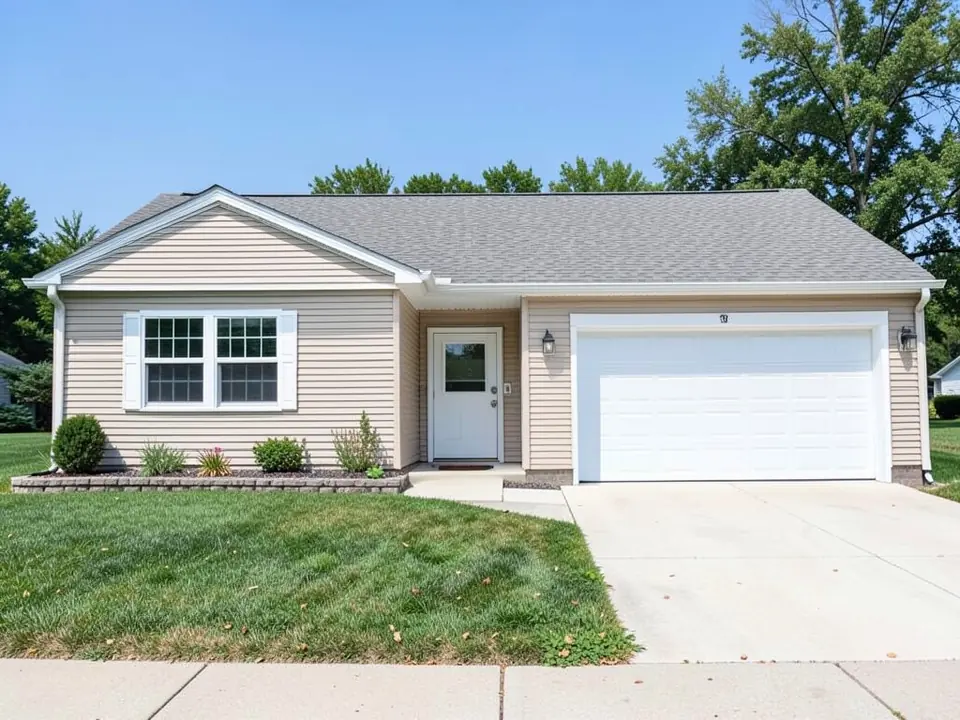 Before
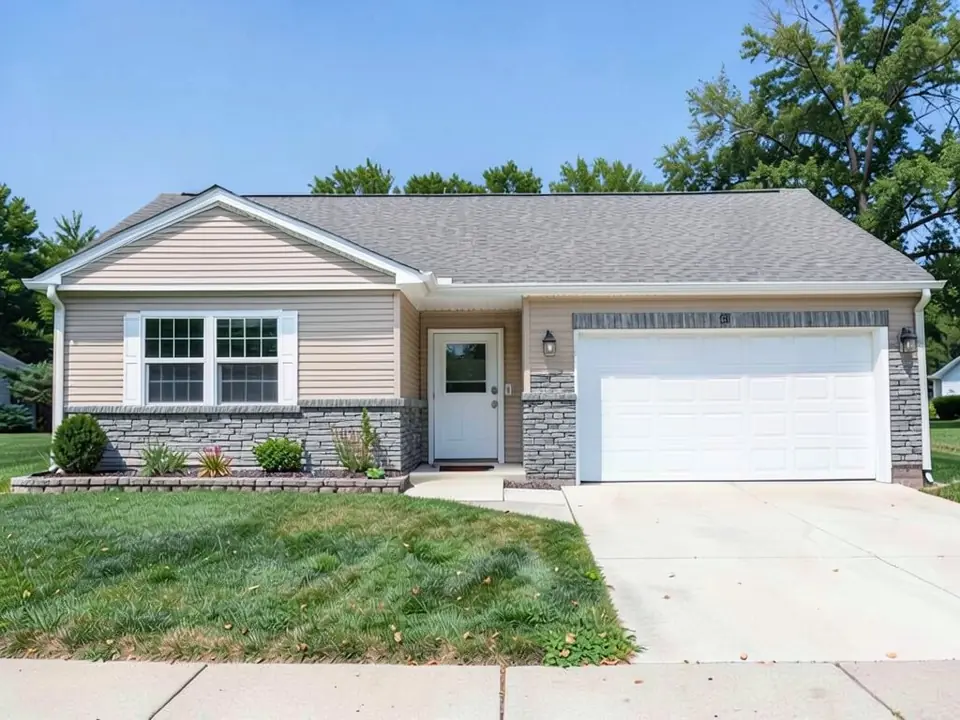 After
After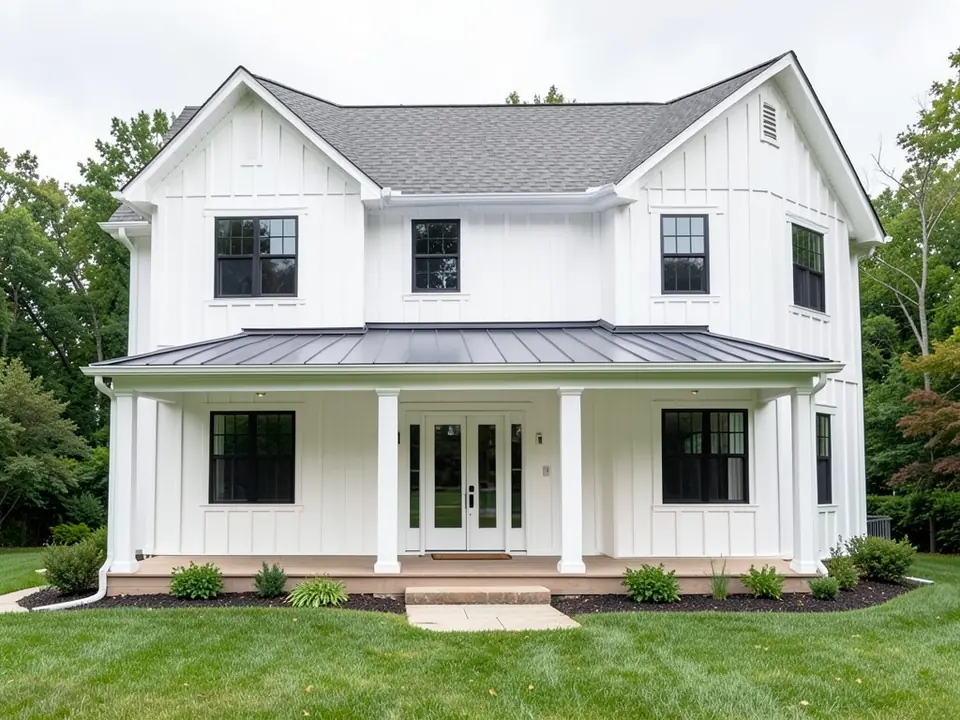 Before
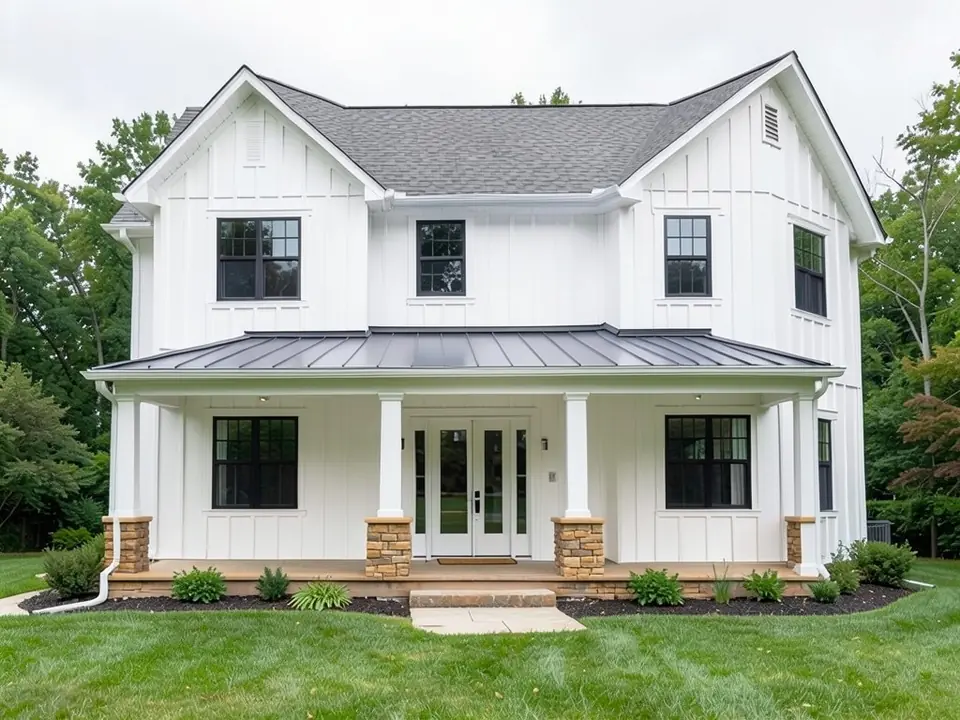 After
After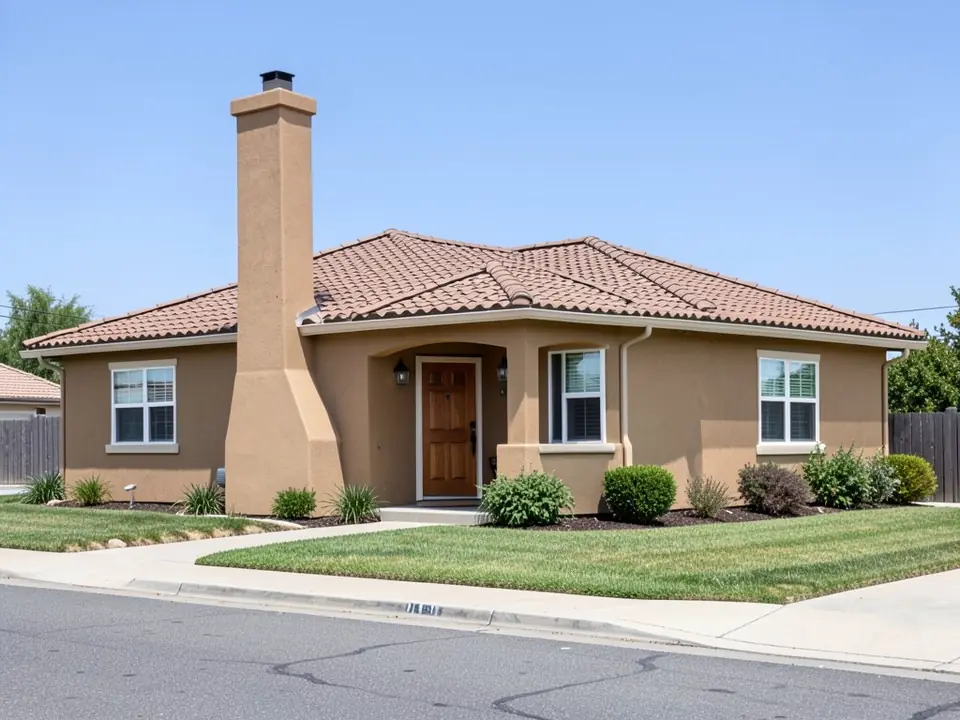 Before
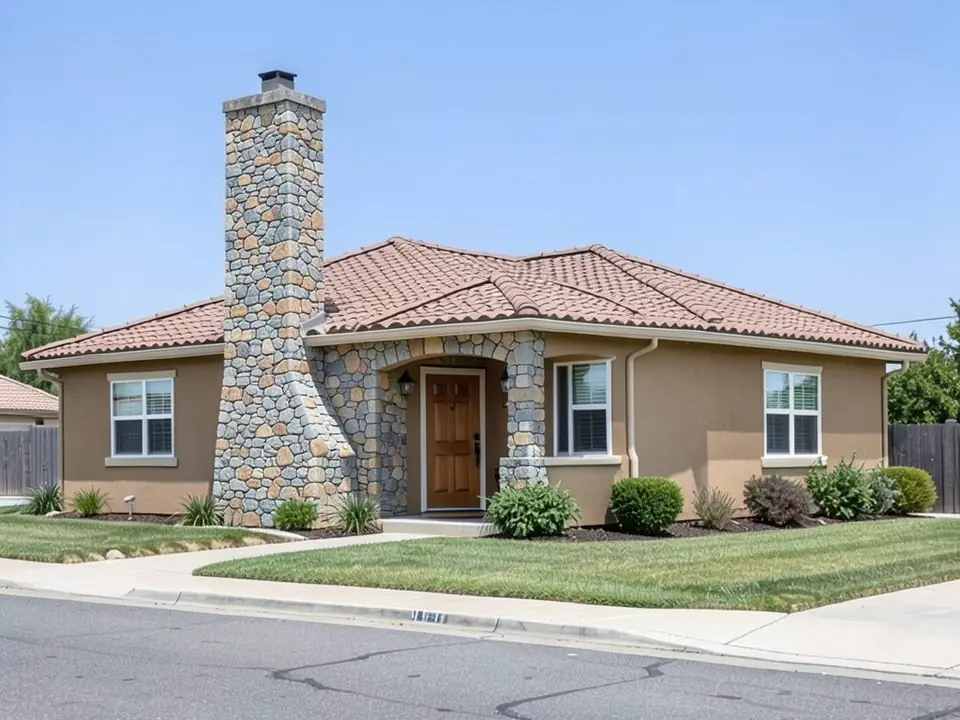 After
AfterWhat this stone veneer visualizer is, and what it is not
It is a photo-based AI preview. You upload a picture of your house, type where the stone should go and what it should look like, and the AI redraws that part of the photo. It is good for questions like: does stone suit this house at all, should it go on the bottom of the wall or on the columns, and is a gray stacked stone or a warm fieldstone the better match for my siding?
It is not a product catalog and not an exact match to any stone maker's product line. It does not measure your walls, count square footage, check your wall structure or give prices. Use it to settle on a direction, then take the render to a supplier and an installer.
How to see stone veneer on your house
Start in the exterior designer
- Take a photo of the front of your house in daylight, with the walls you want to change fully in the frame. Tips for a good photo are further down this page.
- Open the exterior designer and upload it. Choose the building type that fits best: house, bungalow, cottage, townhouse or villa.
- Pick a style and render. The current styles are Modern, Minimalist, Rustic, Contemporary, Mediterranean and Scandinavian. Rustic is a good starting point for wood tones and stone. The style redraws the whole outside, so expect new colors and trim as well.
- Click Edit (the pencil button above the result) and describe the stone, for example: "Add a gray stacked stone veneer wainscot along the bottom third of the front walls. Keep everything else the same."
- Download, or try another look. Each render and each edit counts as one render, so your 2 free renders cover one style render plus one stone edit. More previews need more credits; see the pricing page.
Add stone only and keep the rest of your house as it is
If you like your house and only want to see stone added, open the photo enhancer instead, upload the same photo and run a standard enhancement. This keeps your house as it is and gives you a sharp copy. Then click Edit and type your stone prompt. The enhancement and the edit each use credits, so this route also uses both free renders. Aim for one change per edit and check the rest of the image, because the AI can redraw nearby details such as trim or a chimney base.
Where to put stone on a house front
Where the stone goes changes the look of the house more than which stone you pick. These are the placements worth trying on your photo:
- Wainscot or base. A band of stone along the bottom of the walls, often up to the windowsills. It makes the house look heavier and more grounded and breaks up a long plain wall. It is the classic way to add stone to a ranch or a split-level, as in the first example.
- Porch column bases. Stone on the lower part of each column, with wood or painted posts above. It suits craftsman and farmhouse porches and adds detail without covering a whole wall.
- Garage front. Stone on the wall around the garage door, or on the piers on each side of it. On houses where the garage faces the street, this softens a large flat area.
- Entry or accent wall. One wall or bay around the front door covered in stone. It draws the eye to the entrance and works well when the rest of the house stays plain.
- Chimney. A chimney on the front of the house is a natural place for stone, since it already stands out. The third example shows a stucco chimney redone in fieldstone.
- Full facade. Stone on the whole front wall. It is the boldest change, so render it next to a wainscot version before you commit.
Stone styles to try on your photo
Stacked stone and ledgestone
Thin, long pieces laid in horizontal rows with tight joints. The strong horizontal lines suit modern, modern farmhouse and ranch houses. Gray and charcoal tones read as cool and crisp; tan and brown blends read as warmer.
Fieldstone
Irregular stones of different sizes and shapes, with more visible mortar. It looks rustic and traditional and suits cottages, craftsman houses and older homes.
River rock
Rounded, smooth stones. It gives a lodge or cabin feel and is often used on chimneys and column bases rather than whole walls.
Cut limestone and ashlar
Squared blocks in light cream, buff or gray, laid in neat courses. It looks formal and suits colonial and traditional two-story houses.
Whitewashed or German smear
Stone with a thin layer of white mortar or limewash smeared over it, so the stone shows through softly. It pairs well with white or light painted walls and black windows.
In your edit, name both the style and the color, such as "warm tan ledgestone" or "gray fieldstone with light mortar". Vague words give vague results.
Matching stone to your siding and roof
- Start with the undertone. Look at what stays: siding, trim, roof. Warm walls (beige, tan, cream) usually sit well with stone that has tan, brown or gold in it. Cool walls (white, gray, blue) usually sit well with gray or charcoal stone.
- Pick up a color you already have. Stone with a few pieces close to your roof or trim color tends to tie the house together.
- Do not let stone and siding blend into one. Some contrast between the stone and the wall above it makes the band read clearly from the street.
- Mind the mortar. Light mortar shows every stone shape and looks busier; mortar close to the stone color looks calmer. You can ask for either in your edit.
- Check the rules. If you have an HOA, check what it allows before you settle on a look.
Stone on popular house types
Ranch: a stone wainscot or stone around the garage is the usual way to add weight to a long, low front. Our ranch house exterior makeover guide has more ideas for this shape. Modern farmhouse: keep it to column bases or a low base in ledgestone so the white walls and black windows stay the main look. Craftsman: tapered stone column bases are part of the style, and fieldstone suits it well. Two-story colonial: cut limestone on the lower story or around the entry looks more at home than rustic fieldstone.
Tips for a photo that works
- Stand across the street and keep the whole front of the house in the picture.
- Shoot on a bright, overcast day or with the sun behind you, so the walls are evenly lit.
- Move cars, bins and anything else that blocks the walls where the stone will go.
- Use the original photo, not a screenshot, so the AI has as much detail as possible.
- Ask for one change per edit, say exactly where the stone goes, and end with "keep everything else the same".
What the preview cannot tell you
A render shows a look, not a building plan. It cannot tell you whether stone veneer can go on your wall, how it should be attached or flashed, or what it will cost. AI edits can also shift small details such as trim, gutters or a window, so check the whole image and run the edit again with clearer words if something you care about changed. Colors on screen are only a guide, so compare real samples outside before you order.
Want to change more than the stone?
If you are also thinking about new siding, see our siding visualizer guide to compare vinyl, fiber cement and board and batten looks. For a full list of update ideas, read how to update your house exterior, or restyle the whole outside at once in the exterior designer.
You can also read the brick veneer visualizer and the exterior chimney ideas pages.
Frequently asked questions
Can I see stone veneer on a photo of my own house?
Yes. Upload a photo of the front of your house, then describe where the stone goes and what it looks like, for example "add a gray stacked stone wainscot along the bottom of the front wall". The AI draws the stone on your photo so you can compare it with the house as it is now.
Is the stone veneer visualizer free?
Signing up is free and gives you 5 credits, which is enough for 2 renders in most countries. Free renders carry an AiExterior watermark. If you want more renders or clean images, paid plans are available on the pricing page.
Do I need an account?
Yes. You need to sign in before a render starts, with an email code or your Google account. That is how the free credits are attached to you.
Where does stone veneer look best on the front of a house?
There is no single answer, which is why it helps to see it on your own photo. A wainscot along the bottom of the walls grounds the house, column bases dress up a porch, and stone on a chimney or entry wall makes one feature stand out. Try two placements and compare them side by side.
Stacked stone or fieldstone: which suits a modern house?
Stacked stone and ledgestone have long, straight lines, so they usually sit better on modern and modern farmhouse houses. Fieldstone and river rock have rounder, irregular shapes and read as more rustic or traditional. Render both on your photo before you decide.
Can I preview stone on just the bottom of the wall or on porch columns?
Yes. Say exactly where the stone goes, such as "only the bottom third of the front wall" or "only the bottom of each porch column", and add "keep everything else the same". The examples above show a wainscot, column bases and a chimney.
Does it show real products from a stone brand?
No. There is no product catalog. You describe a stone look in words and the AI draws a close version of it. It is not an exact match to any stone maker's product line, so look at real samples from your supplier against your siding in daylight before you order.
Does it tell me what stone veneer will cost?
No. It does not measure your walls or price materials. For cost, get quotes from local masons or siding contractors and show them the render so they know which look you mean.
Try it on your own house
Upload your house photoFree sign-up with email or Google. You get 2 free renders in most countries; free renders are watermarked.