Concrete Front Steps Makeover Ideas, Shown on Your House
Plain or cracked concrete steps are often the first thing a visitor sees, and you can change their look without tearing them out. Upload a photo of your front entry and describe the finish you have in mind: stone or brick veneer, tile risers, wood-look treads, paint, or a new railing. AiExterior draws it on your photo, with your door, siding and walkway left as they are, so you can compare ideas before you buy anything.
Free sign-up with email or Google. You get 2 free renders in most countries; free renders are watermarked.
Before and after examples
Example images are AI-generated: both the sample houses and their redesigns. Results change from render to render, so treat them as concepts, not exact product matches.
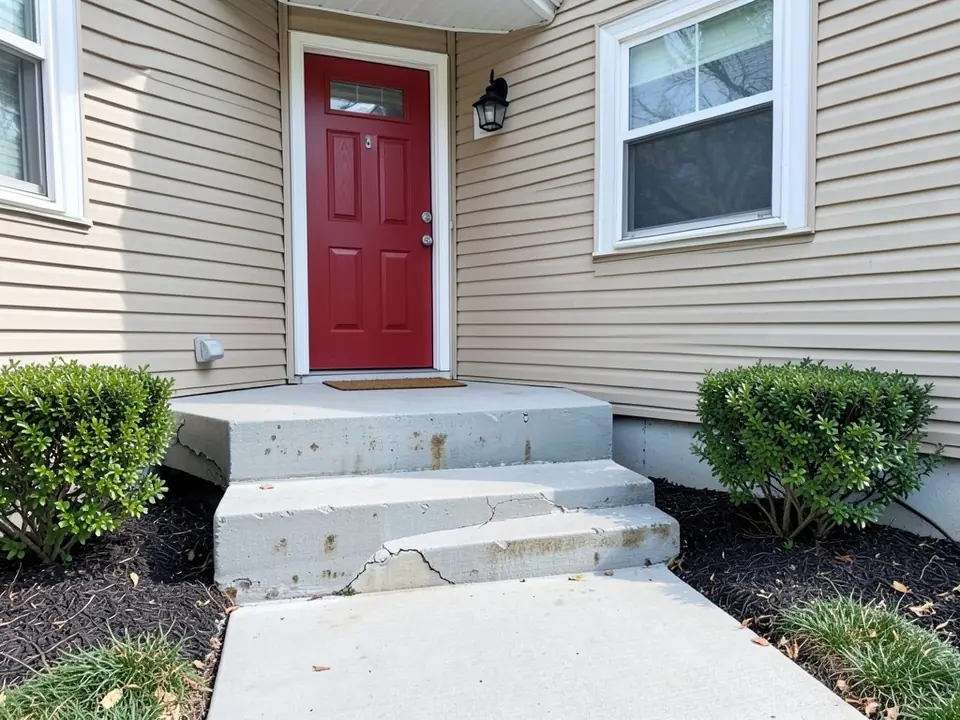 Before
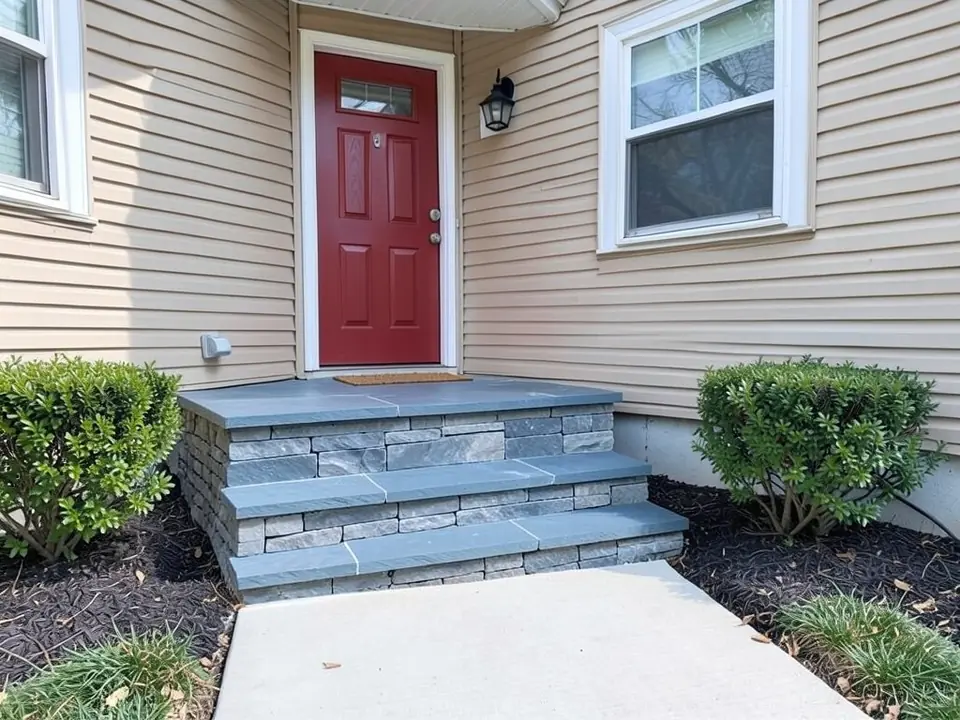 After
After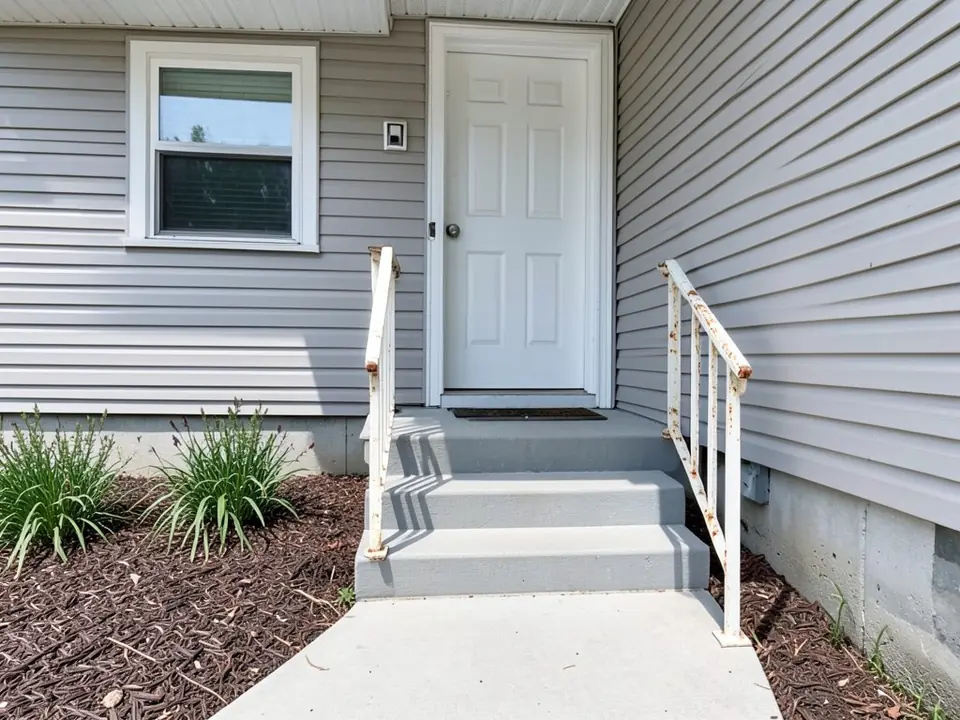 Before
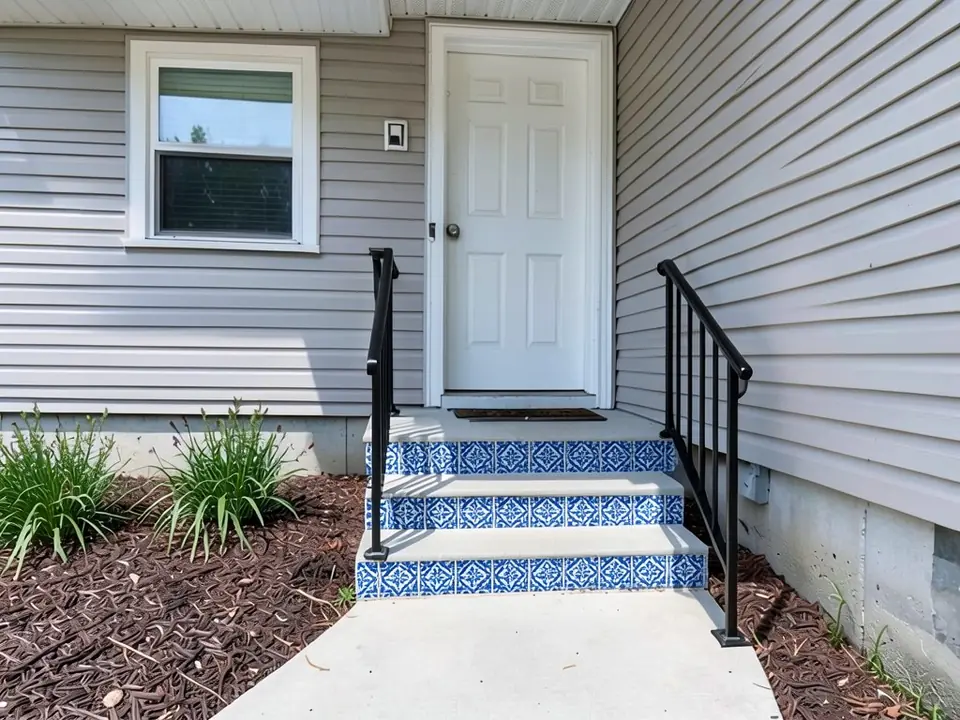 After
After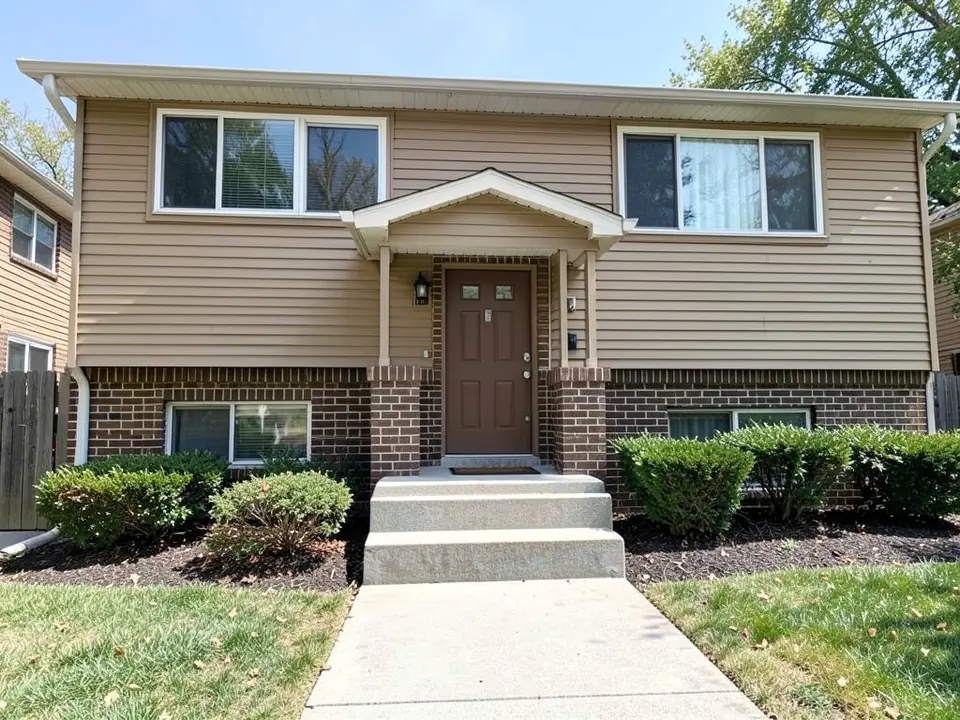 Before
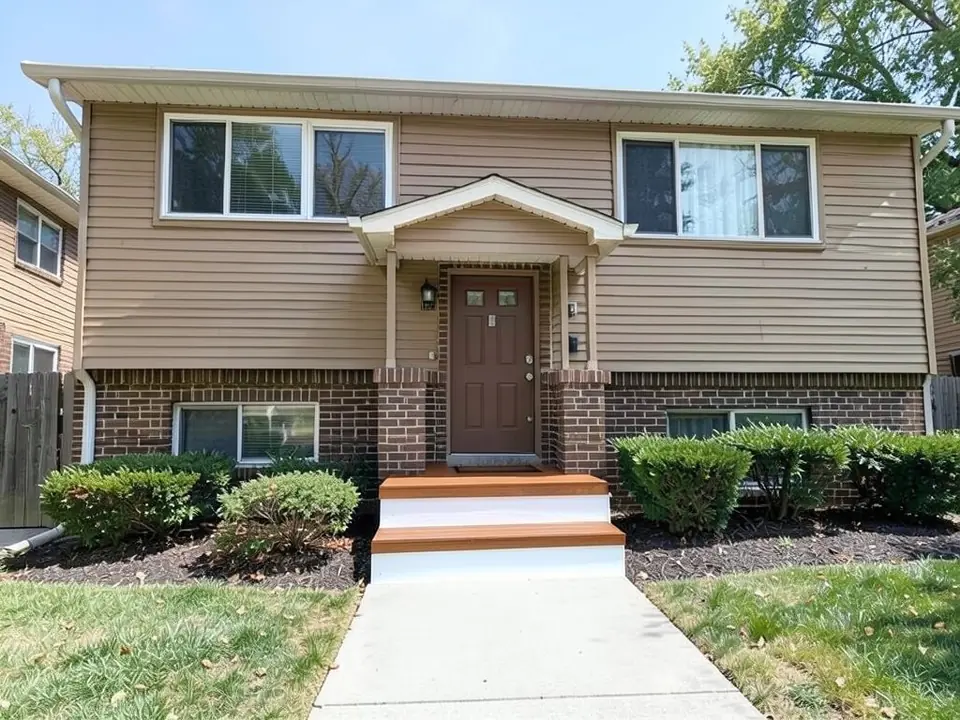 After
AfterWhy make over the steps you have
Many concrete front steps are sound underneath and just look tired: grey, stained, chipped at the edges, with an old railing. If the concrete is solid, you can paint it, stain it, resurface it, or cover it with stone, brick, tile or wood treads, and keep the steps where they are. That is far less work than breaking them out and pouring new ones, and it is one of the cheapest ways to change how the front of a house looks from the street.
What the AI can and cannot do
It can change the look of the steps in your photo: the material on the treads and risers, the color, the pattern and the railing. It can show a finished look over cracked concrete, as in the first example, so you can judge an idea before anyone touches the steps.
It cannot tell whether your concrete is sound, measure your steps, check the step heights or the railing against your local code, or give you a price. It can also tidy up the shape of broken steps, as the first example shows, which a real overlay or veneer will not do. Treat every result as a picture of the look, not a plan, and compare real samples outside before you order.
How to see new steps on your house
Keep your house as it is and change only the steps
The examples on this page used the same idea, one photo plus one written edit, but were run directly on an image model, not through this tool, so your results will look different.
- Take a photo of your entry in daylight, standing on the walkway, with every step, the railing and the front door in the frame. Move planters and mats that hide the steps, and upload the original photo, not a screenshot.
- Open the photo enhancer, upload your photo, keep Standard Enhancement and click Generate Enhancement. This gives you a sharp copy of your entry as it is.
- Click Edit (the pencil button above the result) and paste one of the prompts below into Edit Instructions, or write your own. Name what must stay: the door, the siding and the walkway.
- Check the whole image. The AI can change nearby things you did not ask for, as the captions above show. If something you care about changed, run it again with clearer words.
The enhancement and the edit each use credits, so this route uses both free renders.
Or restyle the whole outside first
In the exterior designer, upload your photo, choose Facade under Select Mode, choose House under Building Type, pick a style (Modern, Minimalist, Rustic, Contemporary, Mediterranean or Scandinavian) and click Generate Design. The style redraws the whole outside at once, so expect new colors, trim and details, not just new steps. Then click Edit to fine-tune one thing. Each render and each edit counts as one render, so your free renders (2 in most countries) cover one style render plus one edit.
The exact prompts behind the examples
These are the edit prompts used for the three examples, word for word. Paste one into Edit Instructions and change the material and color to match your plans.
Prompt 1: bluestone treads and stacked stone (cracked stoop)
Cover the cracked grey concrete steps with new natural stone: put a thick, flat, blue-grey bluestone slab on top of every step, with a straight edge that overhangs the front slightly, and face the front and the sides of every step with rough grey stacked natural stone veneer. No cracks or bare concrete remain on the steps. Do not change anything else: the concrete walkway in front stays plain light grey concrete, and the red front door, doormat, beige siding, window, wall lantern, shrubs, mulch, lighting and camera angle stay exactly the same.
Prompt 2: tile risers and a new black railing (plain steps, old railing)
Change only the steps and the railings: cover the vertical risers of the concrete steps with patterned blue and white porcelain tile, leave the treads as plain grey concrete, and replace both old white railings with simple new black metal handrails in the same places. Keep the white front door, grey siding, window, walkway, mulch beds, plants, lighting and camera angle exactly the same.
Prompt 3: wood-look treads and white risers (split-level entry)
Change only the three concrete steps up to the front door: cover the top of each step with warm brown wood-look treads and paint the front face of each step white. The concrete walkway in front of the steps stays plain grey concrete exactly as it is; do not change it. Keep the brown front door, brick, siding, windows, shrubs, lawn, lighting and camera angle exactly the same.
To write your own, keep the same shape: "Change only the concrete steps: [what goes on the treads], [what goes on the risers], [railing, if any]. Keep the front door, siding, windows, walkway, plants and camera angle exactly the same." Naming the walkway matters: in one of our test runs the AI turned the concrete walkway into wood along with the steps until we told it to leave the walkway alone.
Concrete steps makeover ideas by method
Paint or stain
Paint made for concrete porches and floors is the cheapest change and a common DIY job. Clean the steps well, fill cracks, let everything dry, and roll on thin coats; mix an anti-slip additive into the final coat on the treads. Two colors work well: a darker tread that hides dirt and a lighter riser, or the reverse. Acid stain gives a mottled, stone-like color instead of a flat one, but it only works on bare concrete and needs a sealer afterwards. If water beads on the surface instead of soaking in, the steps were sealed before and need etching so a new finish can bond.
Overlay or resurfacing
A resurfacer or decorative overlay is a thin cement-based coat troweled over old concrete. It covers chipped edges, stains and rough patches, and it can be left plain, colored, or stamped and textured to look like stone, slate or brick. The steps must be scrubbed clean and free of loose concrete first, and the treads should get a brushed or textured finish so they are not slippery when wet. A resurfacer will not fix steps that are sinking or cracked right through.
Stone or brick veneer
Real or manufactured stone, thin brick, or bluestone treads set in mortar over the old concrete give the most solid, permanent look, as in the first example. Matching the stone or brick already on the house makes the steps look built-in. Veneer only works on sound concrete, adds noticeable thickness to every tread, and is usually a mason's job. Treads should be set with a slight slope so rain runs off instead of pooling at the door.
Tile on the risers or treads
Patterned tile on the risers only, as in the second example, adds color without changing how the treads feel underfoot. If you tile the treads too, choose exterior porcelain with a matte or textured, slip-resistant face, never polished tile, and an exterior thinset and grout rated for freeze-thaw. Indoor ceramic tends to crack and pop off outdoors.
Wood or wood-look treads
Warm wood-tone treads over concrete soften a plain entry and suit ranch, split-level and farmhouse styles, especially with white or black risers, as in the third example. Composite or PVC treads need less upkeep than real wood outdoors. Follow the maker's method for fixing them to concrete, and remember they raise every tread.
A new railing
Swapping a rusty or wobbly railing for a simple black metal one changes the whole entry, and it makes the steps safer. Choose a rail you can grip easily, run it the full length of the steps, and fix the posts into sound concrete. A railing on both sides helps older visitors and anyone carrying shopping.
Ideas by house type
Ranch houses
Many ranch houses have only a small, low concrete stoop. Stone or brick that matches the house, a wider landing, and a pair of planters or lights can make it feel like a proper entry. Our ranch house exterior makeover guide covers the rest of the front.
Split-level and raised ranch houses
On a split-level or raised ranch, the steps sit in the middle of the front and lead to a door between the two floors, so they carry a lot of the look. Treads that match the stone or brick on the lower level tie the two halves together. For the rest of the house, see our split-level exterior remodel guide.
Before you start
- Check the concrete first. Hairline cracks and stains are cosmetic. Deep or wide cracks, crumbling corners, loose pieces, or steps that rock or have pulled away from the house are structural, and need repair or a contractor before any new finish.
- Measure every step height. Anything you add to the treads raises the bottom step and shrinks the top step at the door, and uneven steps are a classic trip hazard. The model code most US towns use (IRC R311.7.5.1) allows the tallest riser in a flight to be at most 3/8 inch taller than the shortest, so plan the thickness before you buy materials.
- Keep the treads grippy. Use an anti-slip additive in paint, a textured finish on overlays, and slip-resistant exterior tile or stone. A sealer can make a surface slippery, so check the label.
- Check the railing rule. The IRC (R311.7.8) requires a handrail on at least one side of a flight with four or more risers. Your town may have its own rules, so ask the building department, especially if the work changes the steps' shape.
- Choose outdoor, freeze-thaw rated materials in cold climates, and give treads a slight slope so water runs off.
- Look at the walkway and door together. New steps can make an old walkway look worse. Decide whether the walkway or the front door color changes too, and try them together on your photo.
Sources: the paint, stain, sealer, anti-slip and contractor notes follow The Dailey House concrete front steps makeover guide (thedaileyhouse.com); the cosmetic-versus-structural and resurfacing notes follow The Dailey House guide and Bob Vila's guide to repairing concrete steps; the stone veneer notes follow This Old House; the tile notes follow flooringclarity.com's guides to outdoor and porch tile over concrete; the riser and handrail rules are from the International Residential Code, sections R311.7.5.1 and R311.7.8.
Who this is for
Homeowners with plain or worn concrete steps who want to see a new finish before choosing between DIY and a contractor, people getting a house ready to sell, and anyone who needs a picture to show a mason, a tile setter or the rest of the family.
More exterior ideas
If you are thinking about stone on the walls as well as the steps, our stone veneer visualizer guide shows the main stone styles. For a full list of updates for any dated home, read how to update your house exterior, or restyle the whole outside at once in the exterior designer.
You can also read the exposed foundation ideas and the deck skirting ideas pages.
Frequently asked questions
What is the cheapest way to make over concrete steps?
Paint made for concrete is usually the lowest-cost option and a common DIY job: clean the steps, fix cracks, prime if the label asks for it, and roll on two coats with an anti-slip additive in the coat on the treads. A concrete stain costs a little more and needs a sealer. Overlays, tile, stone and wood treads cost more again. (Based on The Dailey House concrete steps makeover guide.)
How long does a painted finish last, and should I seal it?
It depends on prep, traffic and winters. The Dailey House puts a carefully prepped painted step at roughly two to four years before it wants a fresh coat, and a clear concrete sealer on top helps the paint stand up to sun and foot traffic. If you seal, pick a product that keeps the treads slip-resistant.
Can I stain steps that are already painted?
Not directly. Acid stain needs raw concrete to react with, and paint blocks it. Getting back to bare concrete means removing every trace of the old paint, a far bigger job than repainting. If the steps are painted now, a fresh coat of paint or an overlay is usually the easier change. (Based on The Dailey House guide.)
Can concrete steps be made to look like stone, brick or wood?
Yes, in two ways. A cement-based overlay can be colored and stamped or textured to look like stone, brick or slate, or stenciled for a brick pattern. Or you can cover the steps with the real thing: stone or brick veneer, tile, or wood or composite treads. Real materials add thickness, so measure the step heights first (see Before you start).
When do I need a contractor instead of doing it myself?
Call a pro when the steps have wide or deep cracks, crumbling corners, loose pieces, or move or rock when you stand on them, or when they have pulled away from the house. Those are structural problems, and a new finish would only hide them. Masonry veneer and stone treads are also usually a mason's job. (Based on The Dailey House guide.)
Is it free?
Signing up is free and gives you 5 credits, which is enough for 2 renders in most countries. Free renders carry an AiExterior watermark. If you want more renders or clean images, paid plans are available on the pricing page.
Do I need an account?
Yes. You need to sign in before a render starts, with an email code or your Google account. That is how the free credits are attached to you.
Try it on your own house
Upload a photo of your front stepsFree sign-up with email or Google. You get 2 free renders in most countries; free renders are watermarked.