Mobile Home Skirting Ideas You Can See on Your Own Home
Skirting, also called underpinning, is the band of panels that closes the gap between a manufactured home and the ground. New skirting is one of the quickest ways to make a single-wide or double-wide look finished. Upload a photo of your home and describe the skirting you have in mind: faux stone, brick-look panels, metal, wood-look boards or a new vinyl color. AiExterior draws it on your photo so you can compare looks before you buy panels.
Free sign-up with email or Google. You get 2 free renders in most countries; free renders are watermarked.
Before and after examples
Example images are AI-generated: both the sample houses and their redesigns. Results change from render to render, so treat them as concepts, not exact product matches.
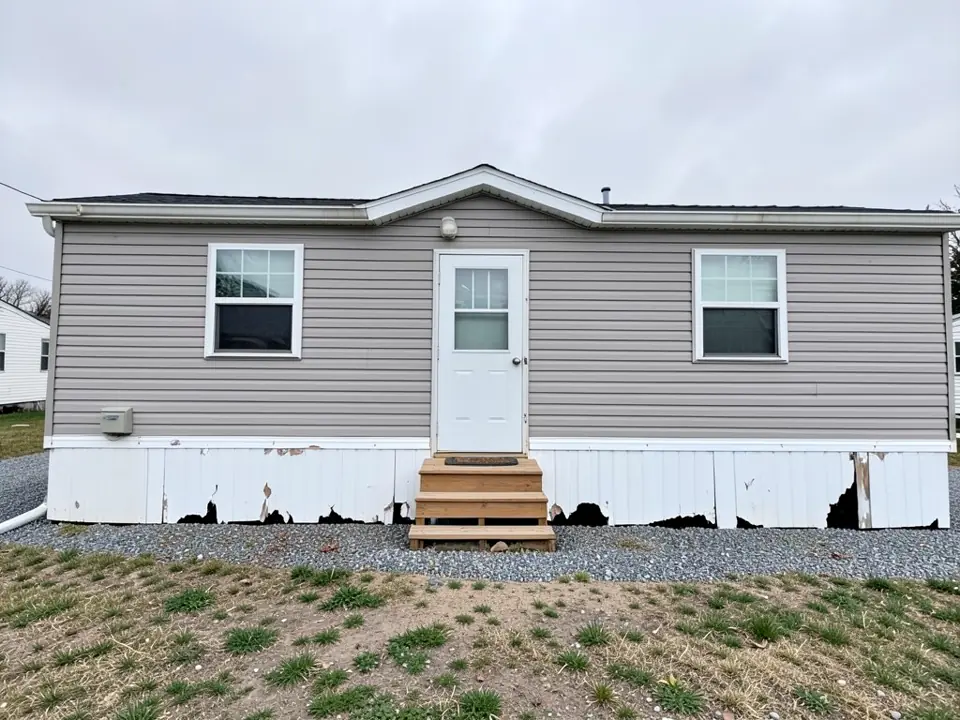 Before
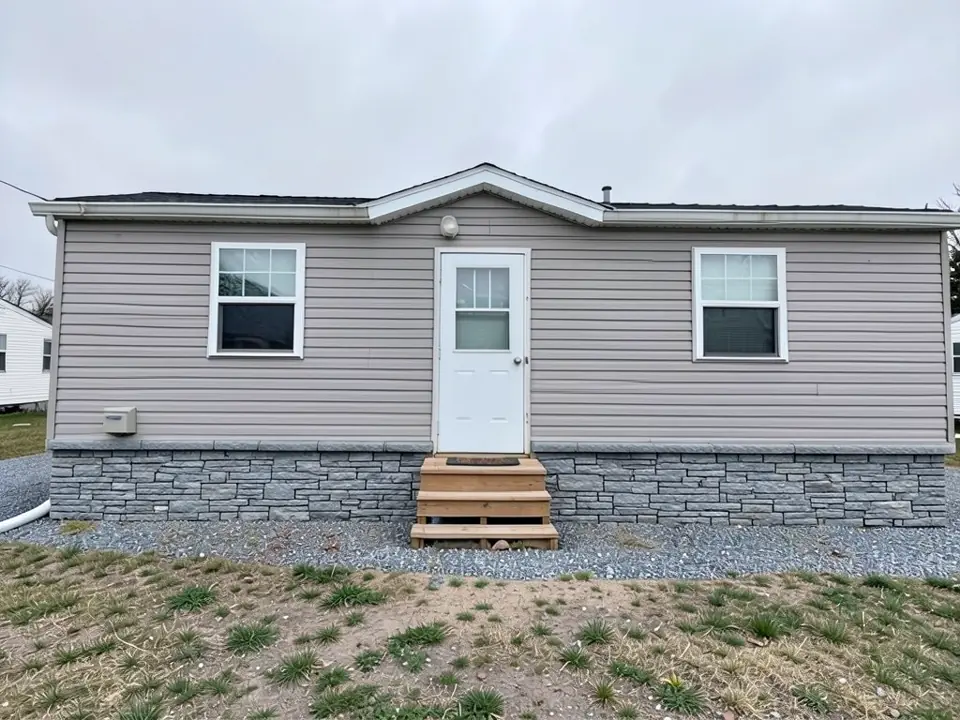 After
After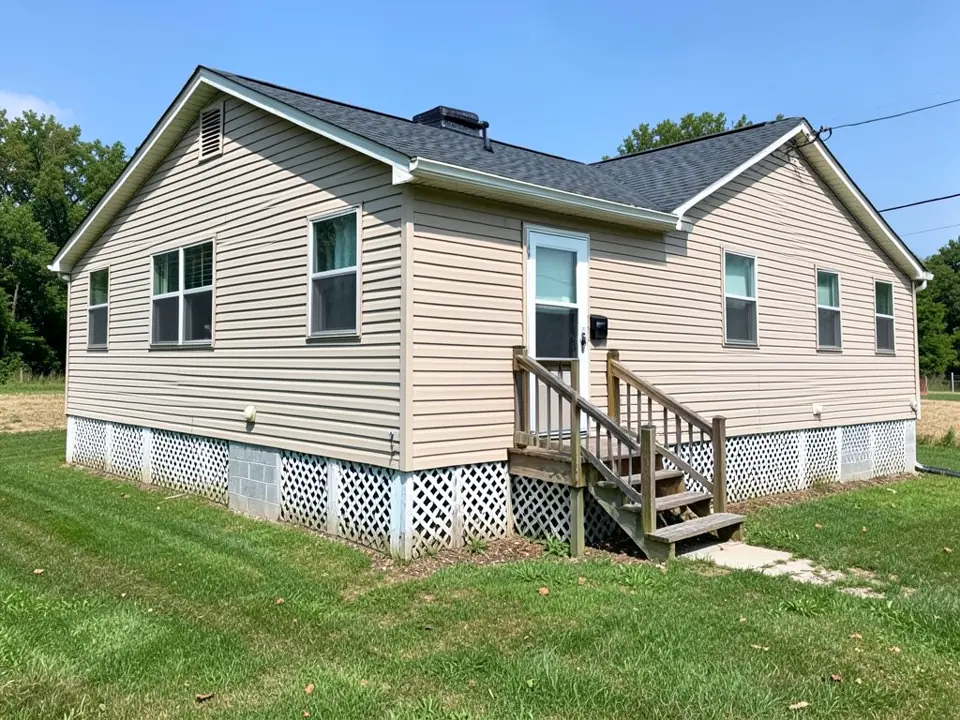 Before
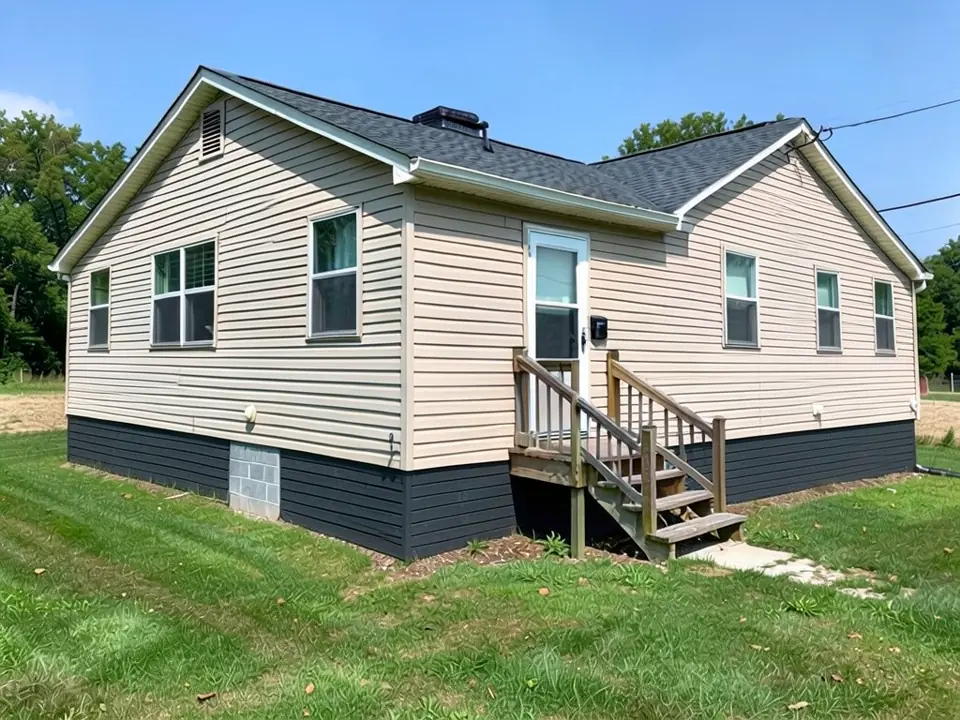 After
After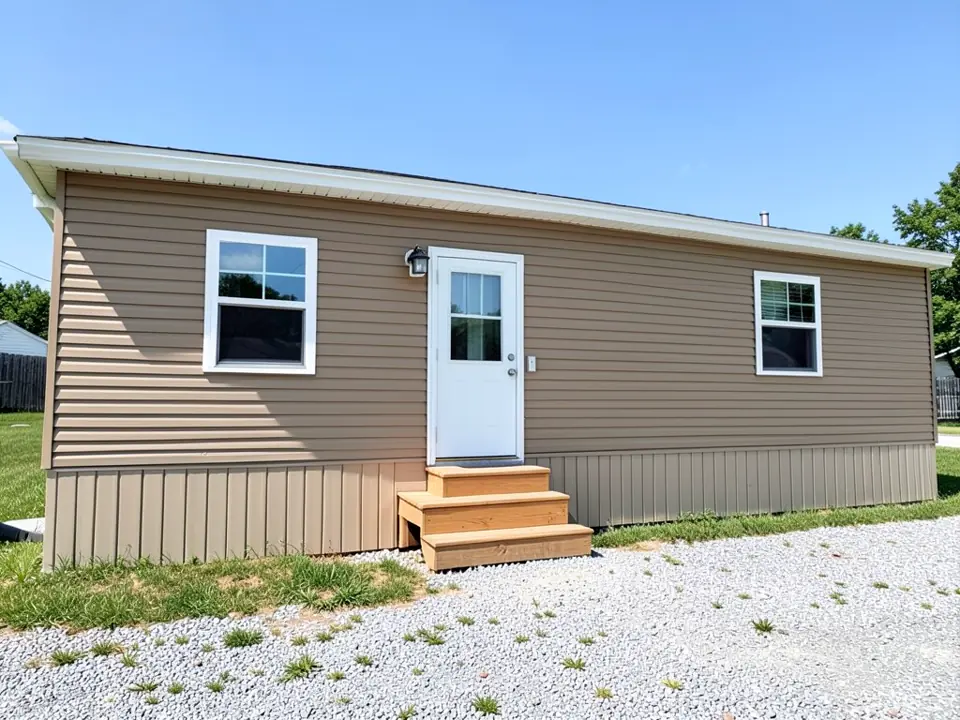 Before
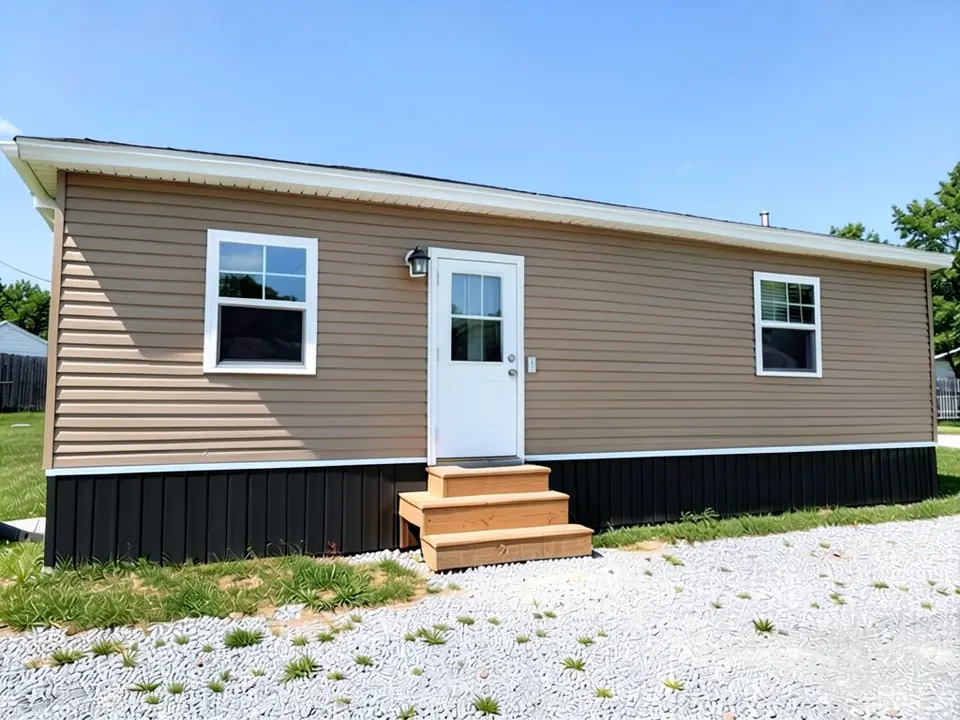 After
AfterWhat mobile home skirting is, and why it matters
A manufactured home sits on piers or blocks, with an open space between the floor and the ground. Skirting closes that space in. It blocks wind, helps keep animals out, protects the plumbing and the belly wrap under the floor, and makes the home look finished instead of sitting on stilts.
Because it runs the full length of the home at eye level, torn or faded skirting is one of the first things people notice, and a good place to change the look without touching the siding or the roof.
What the AI can and cannot do
It can change the look of the skirting band in your photo: the material, the color, the pattern and a trim line along the top. It can also draw over torn or missing panels so you see the base complete, as in the first example.
It cannot measure your home, count panels, rails, corners or vents, give you a price, or check what your park or town allows, and it can draw skirting with no vents and no access door, as all three examples show. For quantities, use a mobile home skirting calculator or the kit instructions. Colors on screen are only a guide, so compare real samples outside before you order.
How to see new skirting on your home
Keep your home as it is and change only the skirting
The examples on this page used the same idea, one photo plus one written edit, but were run directly on an image model, not through this tool, so your results will look different.
- Take a photo of your home in daylight, from far enough back that the whole skirting band is in the frame. Move bins and hoses that hide it, and upload the original photo, not a screenshot.
- Open the photo enhancer, upload your photo, keep Standard Enhancement and click Generate Enhancement. This gives you a sharp copy of your home as it is.
- Click Edit (the pencil button above the result) and paste one of the prompts below into Edit Instructions, or write your own.
- Check the whole image. The AI can change nearby things you did not ask for, as the captions above show. If something you care about changed, run it again with clearer words.
The enhancement and the edit each use credits, so this route uses both free renders.
Or restyle the whole outside first
In the exterior designer, upload your photo, choose Facade under Select Mode, choose House under Building Type, pick a style (Modern, Minimalist, Rustic, Contemporary, Mediterranean or Scandinavian) and click Generate Design. The style redraws the whole outside at once, so expect new colors, trim and details, not just new skirting. Then click Edit to fine-tune one thing. Each render and each edit counts as one render, so your 2 free renders cover one style render plus one edit.
The exact prompts behind the examples
These are the edit prompts used for the three examples, word for word. Paste one into Edit Instructions and change the material and color to match your plans.
Prompt 1: grey faux stone (single-wide with torn vinyl)
Replace only the white vinyl skirting along the bottom of the home with grey faux-stone skirting panels that look like stacked natural stone, filling the torn and missing sections so the skirting is complete and closed to the ground. Keep the siding, roof, windows, front door, steps, ground and camera angle exactly the same.
Prompt 2: charcoal wood-look boards (double-wide style home with lattice)
Replace only the white lattice skirting along the bottom of the home with dark charcoal horizontal wood-look skirting boards that fully close the gap between the home and the ground, hiding the block piers. Keep the siding, roof, windows, front door, porch steps, landing, lawn and camera angle exactly the same.
Prompt 3: black metal with a white trim line (tan single-wide)
Replace only the beige skirting along the bottom of the home with black corrugated metal skirting panels with vertical ribs, finished with a thin white trim line along the top edge where the skirting meets the siding. Keep the tan siding, roof, windows, front door, steps, ground and camera angle exactly the same.
To write your own, keep the same shape: "Replace only the [current skirting] along the bottom of the home with [material and color]. Keep the siding, roof, windows, front door, steps and everything else the same." One material per edit gives cleaner results than a list of changes.
Mobile home skirting ideas by material
Vinyl panels
Vinyl is the most common choice because it is affordable and the easiest kind to install yourself. It comes in white, beige, grey and other colors, and some panels mimic wood. Standard vinyl can crack on impact in very cold weather. If your vinyl is in good shape, try a new color on your photo before you replace anything.
Faux stone and brick-look panels
Molded stone or brick-pattern panels give a masonry look without mortar, never need painting or sealing, and install much like vinyl, but cost more. Grey stacked stone, as in the first example, suits a grey or white home; warmer tan stone suits beige siding. Brick patterns show best on long runs, such as the sides of a double-wide.
Metal skirting
Steel or aluminum panels, ribbed or corrugated, are tougher than standard vinyl against impacts, wind and lawn equipment. Choose coated or galvanized panels so they do not rust. Black metal with a light trim line, as in the third example, gives a single-wide a clean modern base.
Wood and wood-look boards
Wood gives a warm, natural look and can be painted or stained, set as horizontal planks or vertical boards. Real wood needs more upkeep than vinyl; wood-look vinyl panels give a similar look without the maintenance.
Lattice
Lattice is cheap, lets air through and can carry climbing plants. It does little against wind, cold or animals, and many parks do not allow it. Replacing weathered lattice with closed panels is often the biggest visible change you can make, as the second example shows.
Insulated, block and mixed
Insulated skirting (vinyl with a foam backer, or rigid foam behind regular panels) helps cut drafts under the floor in cold-winter areas and looks like any other panel from the street. Painted concrete block or real brick veneer looks like a permanent foundation but is a job for a professional and suits homes on owned land more than homes in a park. Mixing two materials, such as stone with wood, can look custom; keep one clearly in charge.
Skirting ideas by home type
Single-wide homes
From the long side, a single-wide's skirting is one long, unbroken stripe. Skirting darker than the siding can make the home look lower and more settled; skirting in the trim color, often white, ties it to the windows and door. A trim line along the top gives the base a clear edge, as in the first and third examples.
Double-wide homes
A double-wide has more skirting to cover, so the material shows on every side. Stone or brick-pattern panels are the usual choice when owners want it to look more permanent. With a porch or deck, decide whether the skirting runs behind the steps or wraps around them, and keep the access door somewhere you can reach.
Choosing a color
Start from the siding and trim colors you already have, and look at the ground and landscaping around the home. White goes with almost any siding color; black or charcoal separates the base clearly and suits a modern look; beige, tan and grey are the safe neutrals.
Before you start
- Do not seal it up tight. Ground moisture has to escape, and 24 CFR 3285.505 requires vents on at least two opposite sides (see the FAQ for the amount). In areas that freeze, vent covers must be adjustable.
- Plan the access door first. The same standard requires an access opening at least 18 inches wide and 24 inches high, placed so the utility connections can be reached.
- Dryer vents go through. Dryer vents and combustion-air inlets must pass through the skirting to the outside, not end inside the crawlspace.
- Check park rules on approved materials and colors before you order.
- Fix problems underneath first. Leaks, drainage or leveling issues get harder to reach once the skirting is on.
- Measure the height in several places. The ground around a mobile home is rarely level, so buy panels at least as tall as your tallest measurement and trim them to fit.
Sources: the venting and access rules are from 24 CFR 3285.505 (crawlspace ventilation); the material notes and install tips follow the skirting guides at cashnowformyhome.com and dreamdecorative.com, and the color notes the skirting color guide at mobilehomeideas.com.
Who this is for
Owners of single-wide and double-wide homes who want to see new skirting before ordering panels, buyers looking at a home with tired skirting, and anyone who needs a picture to show a park manager or an installer.
More exterior ideas
If the siding needs work too, our siding visualizer guide compares the main siding types. For a full list of updates for any dated home, read how to update your house exterior, or restyle the whole outside at once in the exterior designer.
You can also read the exposed foundation ideas, the deck skirting ideas and the concrete steps makeover pages.
Frequently asked questions
What is the most durable mobile home skirting?
Concrete block and real brick veneer are the most permanent, but they are a job for a mason. Among panels, coated steel or aluminum stands up to knocks, wind and lawn equipment better than standard vinyl, which can crack on impact in very cold weather.
Is skirting the same as underpinning?
Yes. In everyday use both words mean the panels that close in the space between the bottom of a mobile home and the ground. Underpinning is the more common word in some regions; the materials and the ideas on this page are the same.
Does mobile home skirting need vents?
Yes. The federal installation standards (24 CFR 3285.505) require at least 1 square foot of net vent area for every 150 square feet of floor area, or 1 per 1,500 square feet if the ground is covered with a 6-mil polyethylene vapor retarder, with vents on at least two opposite sides. Follow your home's installation instructions and local rules too.
What is the cheapest mobile home skirting?
Plain white vinyl that you install yourself is usually the lowest-cost solid option. Lattice costs less again, but it does little against wind, cold or animals, and many parks do not allow it.
Does skirting help with insulation?
It helps. Closed skirting cuts the wind under the floor, and insulated skirting can cut cold drafts further and lower the risk of frozen pipes. It is not a substitute for heat tape and pipe insulation, and it still needs vents and an access opening.
Do mobile home parks require skirting?
Most parks do, and many have rules on approved materials, colors and venting. Some do not allow lattice. Ask park management before you order anything. If the home is on your own land, local zoning or HOA rules may still apply.
Can the AI tell me how much skirting to buy?
No. The AI only draws a look on your photo. It does not measure your home or count panels, rails, vents or corners, and it can draw skirting with no vents or access door at all. For quantities, use a mobile home skirting calculator or the panel maker's instructions, and measure the height from the ground to the home in several places, because the ground is rarely level.
Is it free?
Signing up is free and gives you 5 credits, which is enough for 2 renders in most countries. Free renders carry an AiExterior watermark. If you want more renders or clean images, paid plans are available on the pricing page.
Do I need an account?
Yes. You need to sign in before a render starts, with an email code or your Google account. That is how the free credits are attached to you.
Try it on your own house
Upload your mobile home photoFree sign-up with email or Google. You get 2 free renders in most countries; free renders are watermarked.