Board and Batten Siding Ideas: Upload Your House and See Them
Board and batten means wide vertical boards with narrow strips over the seams. Whether it covers the whole house or only the upper floor, how wide the spacing is and what color it is all change how a house looks. Upload a photo of your house below to see one on your own home, then read what four published sources say about spacing, mixing and color.
Free sign-up with email or Google. You get 2 free renders in most countries; free renders are watermarked.
Before and after examples
Example images are AI-generated: both the sample houses and their redesigns. Results change from render to render, so treat them as concepts, not exact product matches.
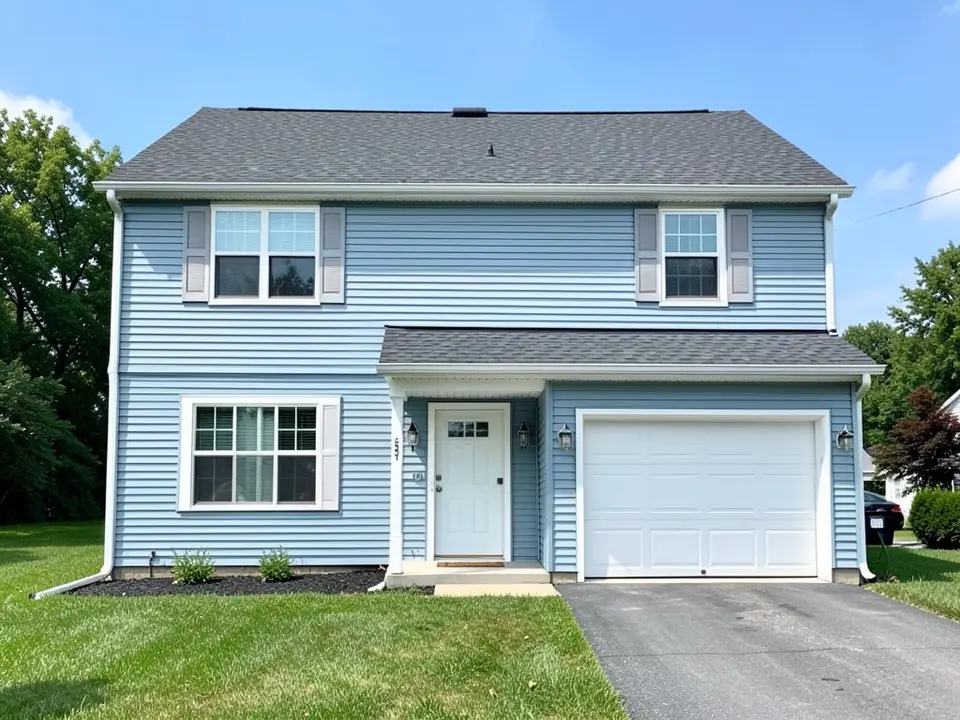 Before
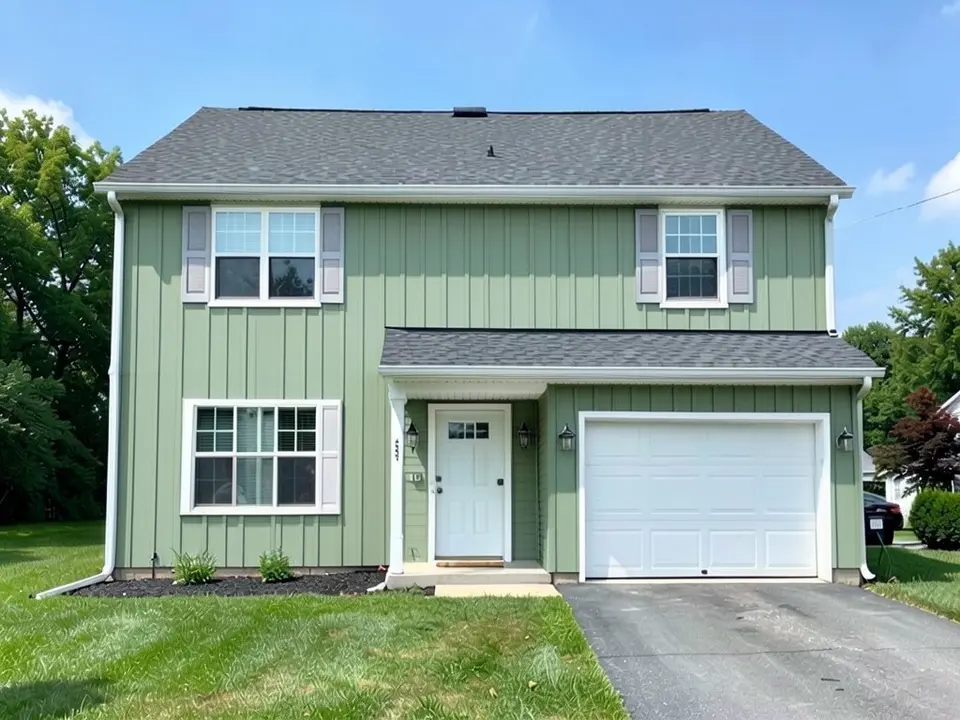 After
After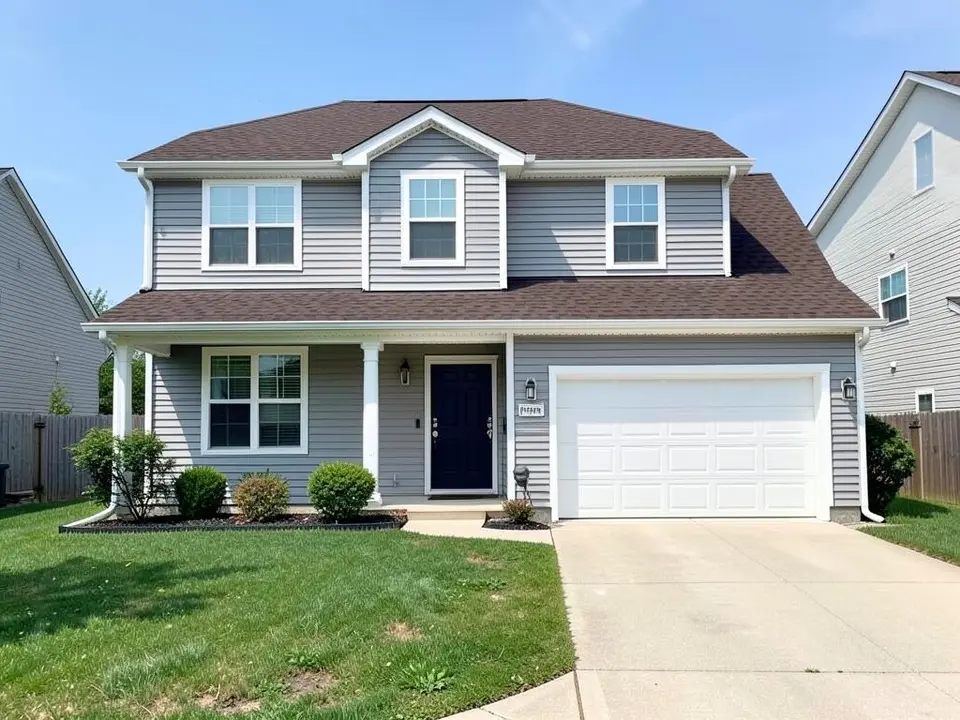 Before
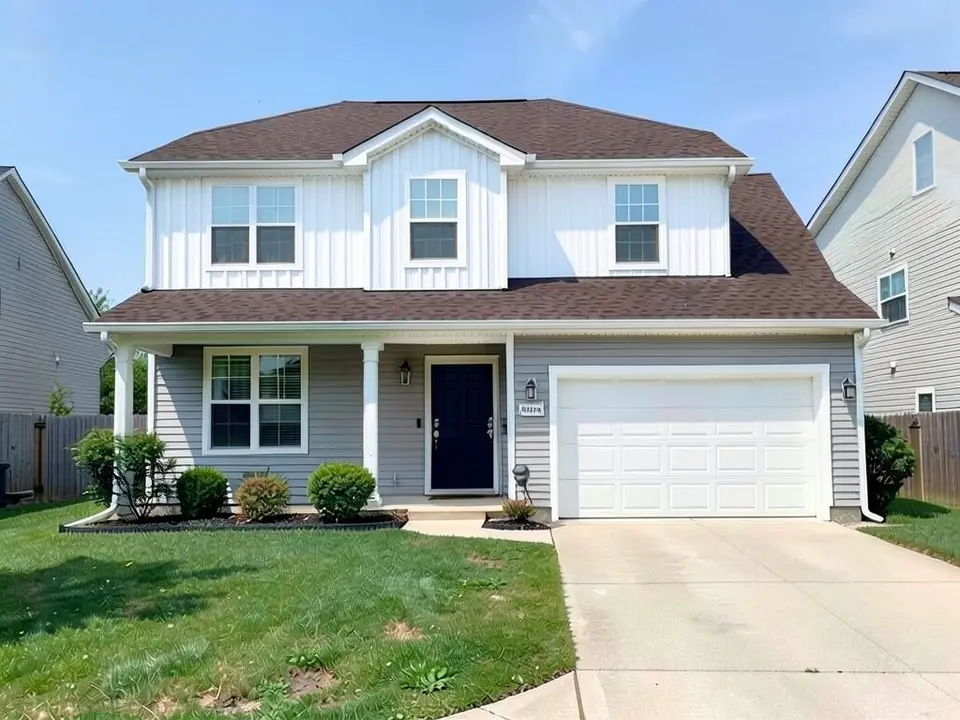 After
After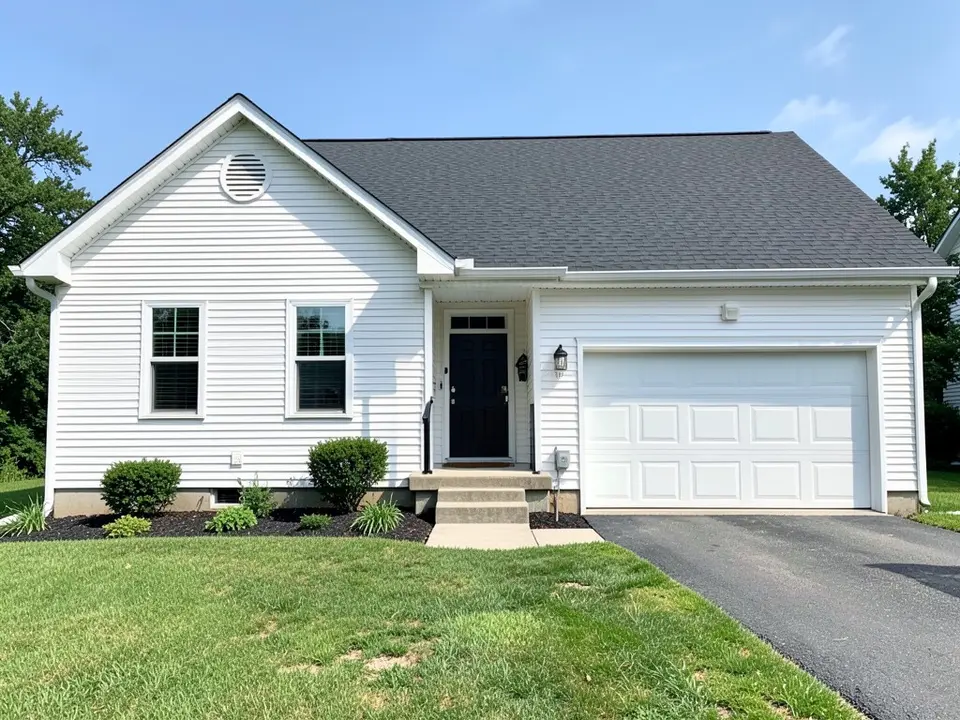 Before
 After
AfterWhat the AI can and cannot do
It can change the siding on the walls you name to vertical board and batten in a color you describe, keep the lap siding on the other walls, and usually keep the shape of the house, so you can judge a look before you order anything.
It cannot set an exact batten spacing in inches, tell a raised batten from a reverse one, or match a real product. In our first example we asked for wide spacing and the battens came out close together. Check the whole image and name every wall you want changed.
Board and batten in short
James Hardie says the style began in the United States in the mid-1800s, with wide vertical boards joined by thin battens that cover the seams. It was traditionally wood. James Hardie and Modern Mill list fiber cement, engineered wood, vinyl, metal and composites as other ways to get the look. This page is about how it looks on a house. For the wider vertical siding choices, see our vertical siding ideas.
The points below come from four published sources: James Hardie, "The Essential Guide to Board and Batten Siding" (a fiber cement maker); Modern Mill, "Board and Batten Siding Sizes, Spacing, and Cost" (a maker of rice-hull composite siding); Heritage Exteriors, "Board-and-Batten Siding with HardiePanel: Design Guide" (an installer that sells James Hardie and LP SmartSide siding); and Today's Homeowner, "15 Board and Batten Siding Colors" (updated November 2024; it offers quote requests). Several of them sell something, so treat them as design opinions, not rules.
Batten spacing and proportion
| Question | What the sources say |
|---|---|
| Wide or tight spacing? | James Hardie: wider spacing gives a clean, modern look on a full facade; tight spacing, especially in a dark color, gives a textured wall or a grate-like effect in a gable peak. |
| Batten distance | Modern Mill: battens at 16 inches on center land on standard framing and look clean; at 24 inches the look is bolder and more modern but can read flat if the batten is narrow. |
| Board and batten widths | Heritage Exteriors: boards of about 8 to 12 inches, battens 2 to 3 inches wide, with about a half-inch gap. Modern Mill: a batten of about one-quarter to one-third of the board width. |
| Reverse board and batten | Modern Mill: the battens go on first and the boards over them, which makes a deep shadow line instead of a raised strip. |
Where to put it: the whole house, the upper floor or an accent
- Every wall. Example 1 puts sage green board and batten on every wall of a two-story house. James Hardie says it works for both farmhouse and modern houses.
- Upper floor and gables over lap siding. Heritage Exteriors suggests board and batten on the gable ends and the upper story with horizontal lap siding on the main body. James Hardie says pairing it with another profile can keep a house from looking too farmhouse. Example 2 tries this.
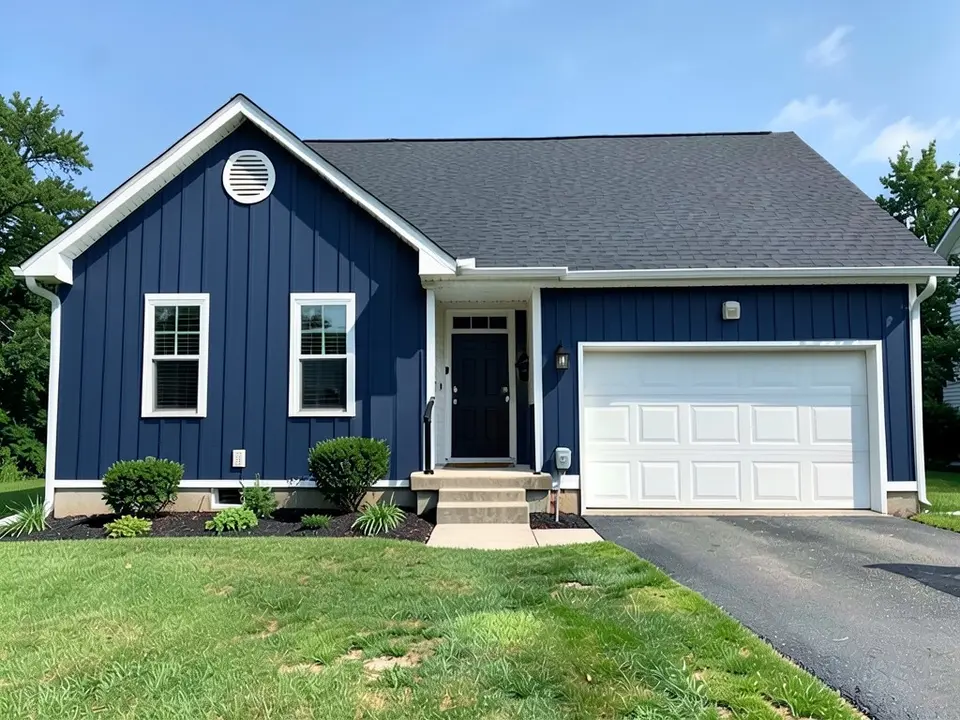
- One dark color. Example 3 uses navy with the battens close together on a one-story house. James Hardie says tight spacing in a dark color gives a textured wall.
Colors and trim
| Look | What the sources say |
|---|---|
| Farmhouse | Heritage Exteriors: white or light gray pairs well with black-framed windows. |
| Contemporary | Heritage Exteriors: charcoal, deep navy or matte black make a sleek, one-color exterior. |
| Trim for blue, navy, burgundy, forest green | Today's Homeowner: white or cream trim. |
| Accents for taupe, slate gray, warm brown | Today's Homeowner: stone and wood accents. |
| Roof | Today's Homeowner: treat your existing roof color as a fixed element and choose the siding around it. |
For more color and trim choices, see siding colors and exterior trim colors.
Upkeep and cost
- Upkeep by material (Modern Mill). Cedar needs regular refinishing, engineered wood needs repainting and sealed cut edges, fiber cement needs repainting on a long cycle, vinyl needs washing, and metal needs little.
- Climate. Modern Mill says coastal, wet and freeze-thaw climates favor materials that resist moisture, and that cedar suits dry inland climates and owners who will maintain it.
- Cost. James Hardie says homeowners report $10.50 to $13.90 per square foot installed. Modern Mill says cost runs from lowest for vinyl to highest for cedar. Both are makers of their own products, so get local quotes.
Three board and batten looks to try
The examples were run directly on an image model, not through the tool above, so your results will look different.
- Sage green on every wall. Example 1 turns a light blue lap-sided house sage green and vertical.
- White upstairs, gray lap below. Example 2 puts white board and batten on the upper floor and the gable and keeps the gray lap siding on the ground floor.
- Navy with close battens. Example 3 turns a white ranch navy with the battens close together.
How to try board and batten on your house
- Photograph the front in daylight, straight on, from far enough back that the whole house fits in the frame.
- Upload it in the tool at the top of this page, or open the exterior designer, choose a style and click generate.
- Name the walls and the color and list what must stay the same, like the prompts below.
- Check the whole image. Look at the trim, the doors, the windows and the roof, and run it again if something moved.
The exact prompts behind the examples
These are the edit prompts used for the three examples, word for word. Change the walls, the color and the list of what stays to suit your house.
Prompt 1: sage green board and batten on every wall
Change only the wall siding: replace the light blue horizontal lap siding on every wall, including the garage wall, with sage green vertical board and batten siding, wide flat boards with thin raised strips running straight up and down about one board-width apart. Keep the white trim, the white front door, the garage door, the roof, the lawn, the driveway and the camera angle exactly the same.
Prompt 2: white board and batten on the upper floor, lap siding kept below
Change only the siding of the upper floor: replace the light gray horizontal lap siding on the upper floor with white vertical board and batten siding, wide flat boards with thin raised strips running straight up and down. Keep the light gray horizontal lap siding on the ground floor and the garage wall exactly as it is. Keep the trim, the front door, the garage door, the roof, the lawn, the driveway and the camera angle exactly the same.
Prompt 3: navy board and batten with close battens
Change only the wall siding: replace the white horizontal lap siding on every wall with navy blue vertical board and batten siding, narrow boards with the thin raised strips close together, running straight up and down. Keep the white trim, the front door, the garage door, the roof, the lawn, the driveway and the camera angle exactly the same.
Before you build or order
- Ask for a real sample. Look at the batten spacing and the color on your own house in your own light.
- Check the roof and the trim. Make sure the new color works with the roof you are keeping.
- Check your HOA or town for exterior color and material rules.
Who this is for
Homeowners and buyers planning new siding or a refresh who want to see board and batten on their own house, in full or as an upper-floor accent, before they pay for materials.
More exterior ideas
See vertical siding ideas, modern farmhouse exterior and lap siding ideas for the siding side, and black house exterior ideas and vinyl siding colors for the color side.
Frequently asked questions
Can I see board and batten siding on my own house?
Yes. Upload a photo of the front of your house in the tool at the top of this page, say which walls get board and batten and what color, and list what must stay the same. Free accounts get 2 free renders in most countries; free renders are watermarked.
How far apart should the battens be?
The sources give different numbers. Modern Mill says battens at 16 inches on center land on standard framing and look clean, and at 24 inches the look is bolder but can read flat if the batten is narrow. Heritage Exteriors suggests boards of about 8 to 12 inches with battens 2 to 3 inches wide. James Hardie says wider spacing looks clean and modern on a full facade and tight spacing in a dark color gives a textured wall. Our AI picture cannot set an exact spacing, so ask your installer for a sample.
Should I use board and batten on the whole house or only part of it?
Both are done. Heritage Exteriors suggests board and batten on the gable ends and the upper story with horizontal lap siding on the main body. James Hardie suggests pairing it with another profile such as lap siding to avoid an overly farmhouse look. Example 2 on this page shows the mixed version on a photo.
What colors work with board and batten?
Heritage Exteriors says white or light gray pairs well with black-framed windows for a farmhouse look, and charcoal, deep navy or matte black make a sleek exterior. Today’s Homeowner suggests white or cream trim for blue, navy, burgundy and forest green siding, and stone or wood accents for taupe, slate gray and warm brown. See the color table on this page.
What is reverse board and batten?
Modern Mill describes it as installing the battens first with the boards over them, which leaves a deep shadow line between boards instead of a raised batten. Our AI picture tool draws vertical siding in general and may not tell the two apart, so describe the look you want and check the result.
How much does board and batten siding cost?
It depends on the material and where you live. James Hardie, a fiber cement maker, says homeowners report spending $10.50 to $13.90 per square foot installed. Modern Mill says the cost runs from lowest for vinyl to highest for cedar and natural wood, with overlapping ranges. Get local quotes.
Does the AI match a real siding product?
No. It draws a look on your photo from your description. It will not match a manufacturer color or a real board width, so use it to decide on a look, then order real samples.
Try it on your own house
Upload your house photoFree sign-up with email or Google. You get 2 free renders in most countries; free renders are watermarked.