Craftsman House Exterior Colors: Try Olive, Brown or Navy on Yours
Free sign-up with email or Google. You get 2 free renders in most countries; free renders are watermarked.
A Craftsman has stone piers, tapered columns and exposed rafter tails that you probably want to keep, so the question is the body, trim and door color. Upload a photo of your house below to try a color, then see what two published guides suggest and three before and after examples.
Siding colorsBefore and after examples
Example images are AI-generated: both the sample houses and their redesigns. Results change from render to render, so treat them as concepts, not exact product matches.
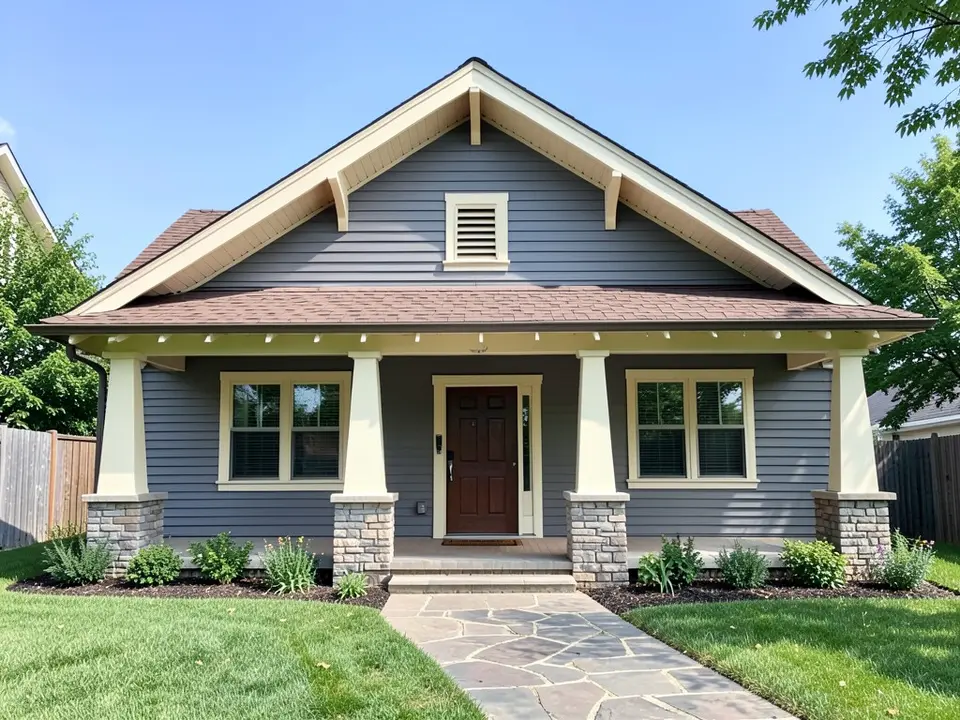 Before
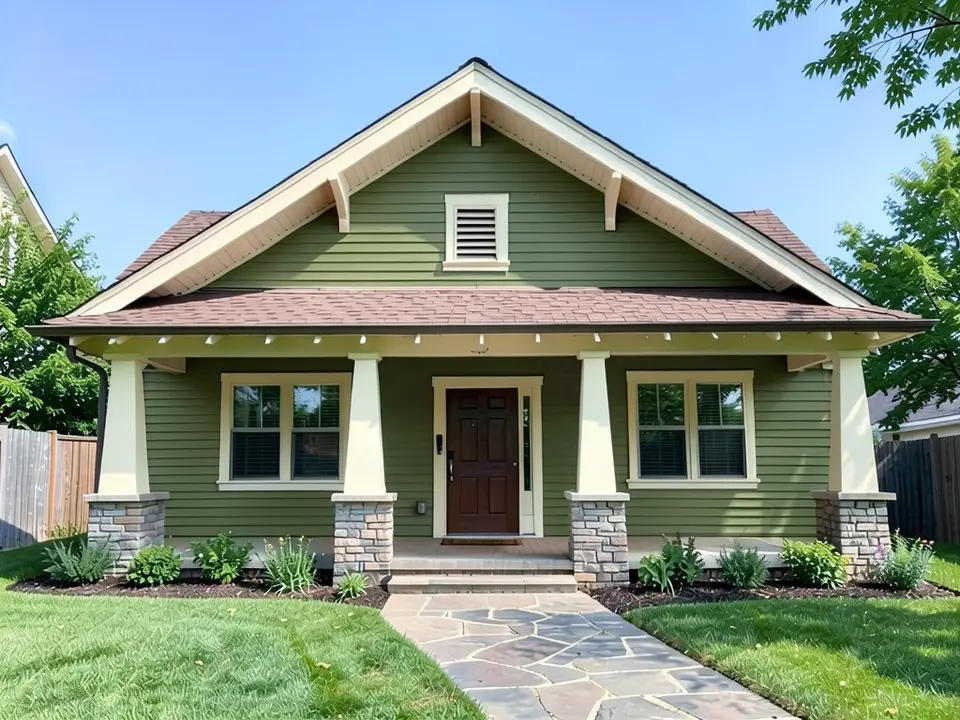 After
After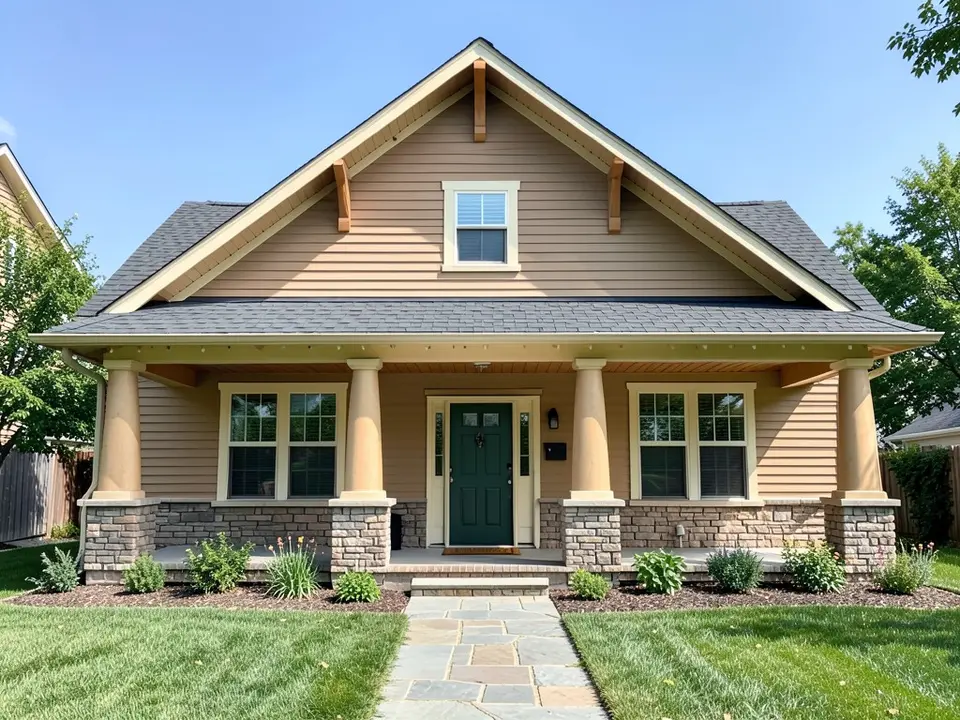 Before
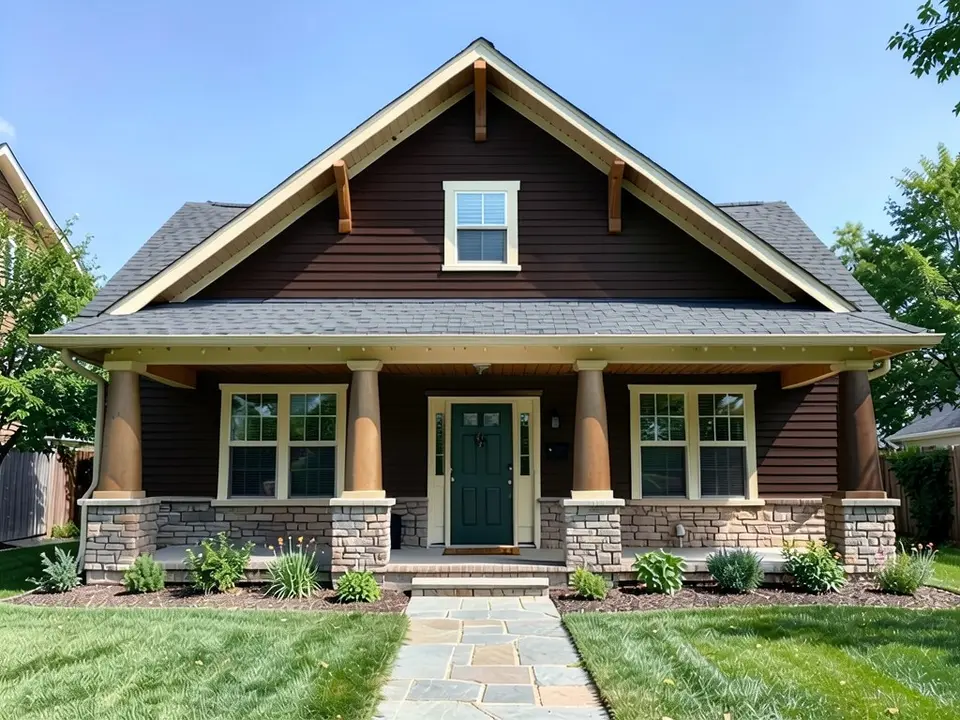 After
After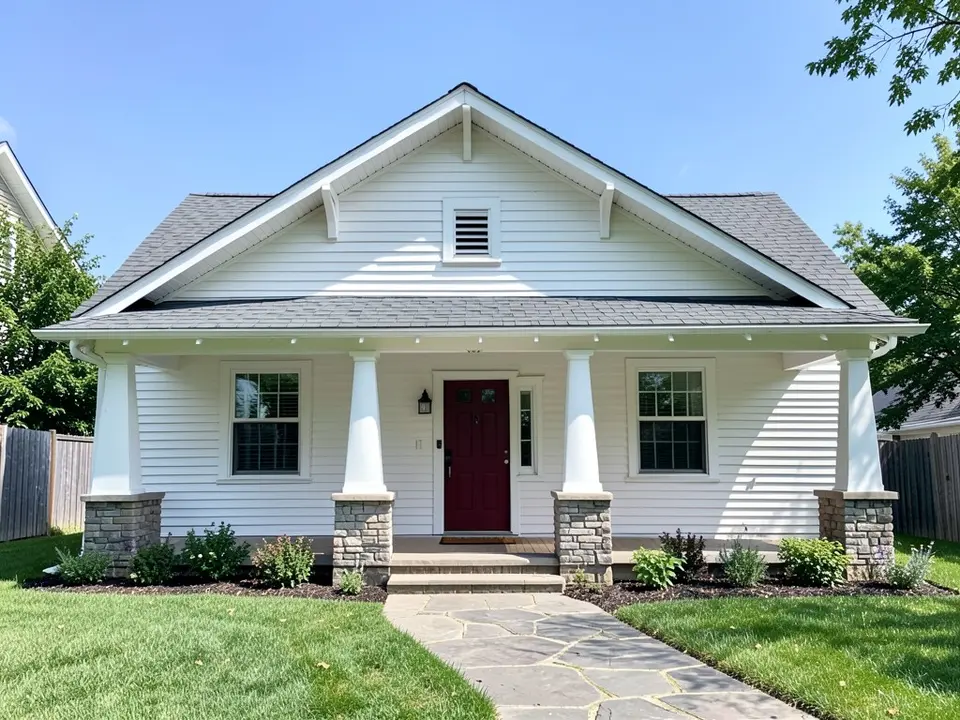 Before
 After
AfterWhat the AI can and cannot do
It can repaint the siding in your photo and leave the stone, porch columns, trim and roof as they are, so you can see a body color on your own Craftsman.
It cannot match a paint brand's color or show how it will read in your light. As the captions say, small details can change too, such as the rafter tails, a porch light or the grass. Treat each result as a direction to test with a real paint sample.
What published guides suggest for a Craftsman exterior
These suggestions come from two published pieces: Homestyler, "Craftsman Home Exterior Color Ideas" by María Gómez (October 24, 2025), and "Exterior Color Schemes" by John Crosby Freeman at artsandcraftshomes.com (April 23, 2019). They are design opinions, not rules, and the second one is a single example scheme from a series. Both pieces name paint products; we left those out and kept the color and placement ideas.
| Part you can repaint | What the sources say |
|---|---|
| Body | Homestyler lists a deep olive, a greige (a subtle neutral that works well on mismatched siding), a soft grayish blue that may look grayer in low light, and a neutral taupe or soft charcoal as a calm base for one bold accent. |
| Trim | Homestyler suggests cream or white for contrast, walnut or chocolate brown trim with a greige body for warmth without heaviness (it warns that high-gloss trim can look excessive), and cream with sage for a sage porch. |
| Front door | Homestyler suggests a teal or a deep red on a neutral body, and notes that trendy door colors may age less well than classic tones. |
| Porch | Homestyler describes a two-tone porch: a sage body with cream trim and a darker stair riser or balustrade, as a way to refresh the entrance without repainting the whole house. |
| Historic-style example | Freeman's cottage bungalow example splits the colors up: pale clapboards, a warmer deeper tone on the gable shingles, a green on the cornices, rafter tails, corner boards and window casings, a neutral greige on the foundation, pillars and stairs, and a rust red on the entry door and brick piers. |
Other points from the sources:
- Bright colors as accents. Homestyler says bright colors work best on doors or porch posts rather than on full exterior walls, especially on historic homes.
- Small porches. A deep olive hides dirt well, but Homestyler warns that a dark body can make a small porch feel cramped, and suggests warmer trim to balance it.
- Choose the body first. Homestyler suggests picking the body color first, then choosing trim that either contrasts with it or deepens the mood.
- Test for about a week. Homestyler suggests testing samples on large panels and watching them over about a week in different weather, including at dawn and dusk, since midday glare can mislead.
- Historic homes. Homestyler points to National Park Service Preservation Brief 10 for historic houses and says a color consultant may be worthwhile for historic or highly detailed homes.
The details the tool should leave alone
A Craftsman front has stone piers, tapered porch columns, exposed rafter tails and a low gable. In the prompts below we ask the AI to keep those as they are and change only the siding color. For other siding and trim ideas, see siding colors and exterior trim colors.
Three Craftsman body colors to try
The examples were run directly on an image model, not through the tool above, so your results will look different. In each prompt the stone, columns, trim, door and rafter tails are told to stay as they are.
- Gray to muted olive. Example 1 turns gray siding into a muted olive, the first body color Homestyler lists. The rafter tails turned green too.
- Tan to chocolate brown. Example 2 goes from a warm tan to a deep brown, a test of how a dark body looks with cream trim and a full porch.
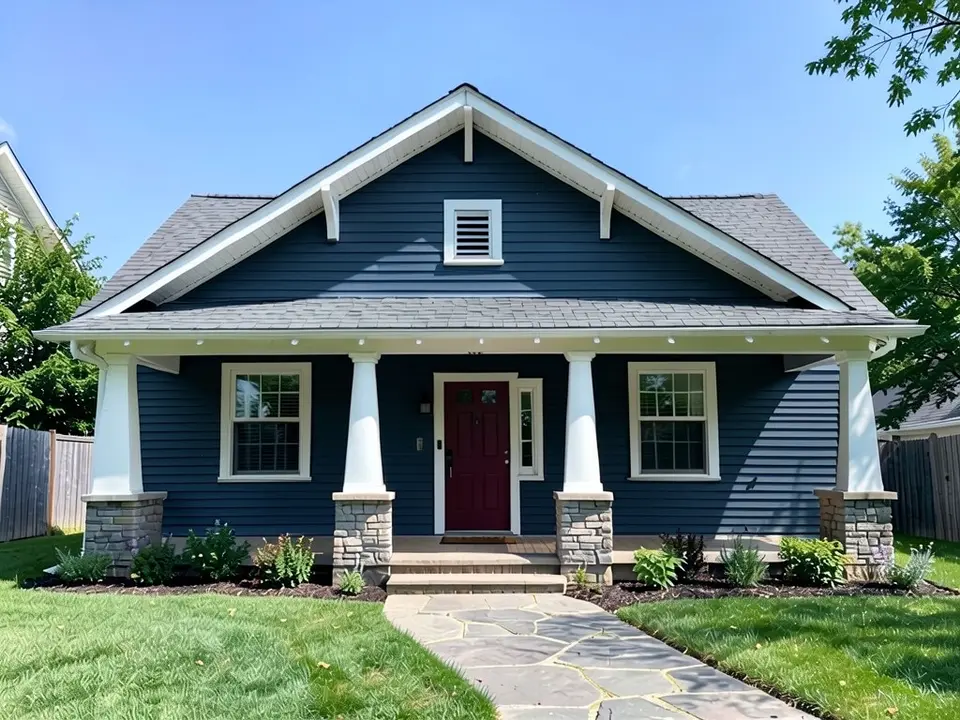
- White to deep blue. Example 3 repaints white siding a dark blue. It came out a deep navy, much darker than the soft grayish blue in the guide.
How to try it on your house
- Photograph the front in daylight, straight on, from far enough back that the whole gable and porch fit in the frame.
- Upload it in the tool at the top of this page, or open the exterior designer, and name the body color you want.
- Say what stays. List the stone, porch columns, trim, door and rafter tails to keep, as the prompts below do.
- Check the whole image. Look at the details around the gable and the porch, and run it again if something changed that you did not ask for.
The exact prompts behind the examples
These are the edit prompts used for the three examples, word for word. Change the colors and the list of what stays to suit your house.
Prompt 1: gray siding to muted olive
Change ONLY the wall siding color: repaint the gray lap siding on every wall a muted olive green. Keep the stone piers, the porch columns, the cream trim, the dark wood front door, the exposed rafter tails, the roof, the lawn, the walkway, the sky and the camera angle exactly the same.
Prompt 2: tan siding to chocolate brown
Change ONLY the wall siding color: repaint the warm tan lap siding on every wall a deep chocolate brown. Keep the stone bases, the porch columns, the cream trim, the dark green front door, the exposed rafter tails, the roof, the lawn, the walkway, the sky and the camera angle exactly the same.
Prompt 3: white siding to dark slate blue-gray
Change ONLY the wall siding color: repaint the white lap siding on every wall a dark slate blue-gray. Keep the stone piers, the porch columns, the white trim, the dark red front door, the exposed rafter tails, the roof, the lawn, the walkway, the sky and the camera angle exactly the same.
Before you paint
- Test real samples on a large panel and watch it for about a week, as Homestyler suggests.
- Check your HOA, town or historic district. Some limit exterior colors.
- Plan the trim and door. See exterior trim colors, front door colors and porch ceiling colors.
Who this is for
Homeowners and buyers with a Craftsman or bungalow-style house who want to see a body color on their own photo before buying paint.
More exterior color ideas
See siding colors, exterior trim colors, front door colors, porch ceiling colors, lap siding ideas and the exterior paint visualizer.
Frequently asked questions
What colors suit a Craftsman house?
Homestyler lists a deep olive, a greige, a soft grayish blue and a neutral taupe or soft charcoal as body colors. Freeman's historic-style example uses a pale body with a green on the trim details. Examples 1 to 3 above try an olive, a brown and a navy on the same style of house.
What trim color goes with a Craftsman house?
Homestyler suggests cream or white for contrast, and walnut or chocolate brown with a greige body. It also mentions cream with sage for a sage porch. All three examples above keep a cream or white trim.
What front door color suits a Craftsman?
Homestyler suggests a teal or a deep red on a neutral body, and says trendy door colors may age less well. Example 3 above keeps a dark red door, and Example 2 keeps a dark green one.
Should I use bright colors on a Craftsman?
Homestyler says bright colors work best on doors or porch posts rather than on full exterior walls, especially on historic homes.
Is a dark body color a good idea?
Homestyler says a deep olive hides dirt well, but a dark body can make a small porch feel cramped and works better with warmer trim. Example 2 above puts a deep brown on a house with a full-width porch so you can see the effect.
Can I try colors on my own photo with the stone and rafter tails kept?
Yes. Upload a photo of the front of your house in the tool at the top of this page, name the siding color and tell the AI to keep the stone, columns, trim and rafter tails, like the prompts below. In Example 1 the rafter tails still turned a little green, so check the whole image.
My house is in a historic district. What should I do?
Homestyler points to National Park Service Preservation Brief 10 for historic houses and says a color consultant may be worthwhile. Ask your local historic commission what colors are allowed before you paint.
Will the colors come out exactly as I ask?
Not exactly. Our slate blue-gray came out a deep navy, and the green and brown shifted the gable details too. Use the render to compare directions, then test real paint samples on your wall for about a week.
Is this tool free?
Signing up is free and gives you 5 credits, which is enough for 2 renders in most countries. Free renders carry an AiExterior watermark. If you want more renders or clean images, paid plans are available on the pricing page.
Do I need an account?
Yes. You need to sign in before a render starts, with an email code or your Google account.
Try it on your own house
Upload your house photoFree sign-up with email or Google. You get 2 free renders in most countries; free renders are watermarked.